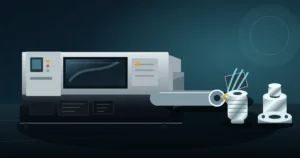
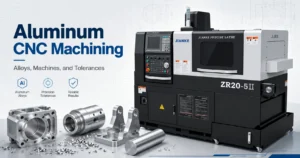
Heavy-duty CNC lathe is an important basic equipment for modern precision manufacturing. Whether it is processing large aerospace parts, oil and gas equipment, or key components of heavy industry, choosing a suitable heavy-duty CNC lathe is directly related to production efficiency, part quality and long-term profitability of enterprises.
What Is Heavy-Duty CNC Lathe?
A heavy-duty CNC lathe is a kind of computer numerical control lathe designed for processing large diameter, high weight or extremely hard materials, and its processing capacity far exceeds the standard CNC lathe. Different from ordinary lathes, this kind of industrial equipment adopts reinforced cast iron bed, high power servo drive spindle and high torque drive system, which can stably realize large cutting depth processing in long-term continuous production.
Typical heavy-duty CNC lathes can process parts with diameters from 500 mm to more than 3000 mm and weights up to several tons, and maintain high machining accuracy. The combination of its rigid structure, thermal stability and numerical control automation system makes it an indispensable key equipment in aerospace, shipbuilding, energy, mining, heavy equipment manufacturing and other industries.
How does the Heavy-Duty CNC Lathe Work?

The basic working principle of heavy-duty CNC lathe is the same as that of ordinary lathe: workpiece rotation, tool material removal. However, in terms of degree of automation, machining accuracy and processing scale, heavy-duty CNC lathes far exceed manual lathes or light-duty lathes. Its numerical control system ( usually FANUC, Siemens or Mitsubishi system ) can accurately coordinate the spindle speed, feed speed, tool path and other actions by analyzing the G-code program, so as to realize the efficient and precise machining of large heavy parts.
Spindle speed and direction: controlled by speed (RPM) or constant surface speed (CSS) mode
Axis motion (X/Z axis): linear servo drives move the tool holder with micron accuracy
Turret indexing: automatic multi tool position can shorten the processing cycle
Cooling and lubrication system: continuous coolant or high pressure spindle cooling
The difference between heavy-duty CNC lathes and light-duty CNC lathes is their structural rigidity, usually using thermally symmetrical Mihanna cast iron bed and slide rail optimized by finite element analysis (FEA).
Types of Heavy-Duty CNC Lathes
Understanding the different configurations helps buyers choose the right CNC machine for the specific application.
Horizontal heavy-duty CNC lathe
Horizontal heavy-duty CNC lathe is the most common configuration with spindle axis level. It is very suitable for machining long shaft, roller and cylindrical parts. There are various designs such as flat bed, inclined bed and gap bed.
Vertical CNC turning center
The spindle is vertical, and the worktable rotates like a turntable. It is most suitable for processing short, wide or heavy disc parts, such as flanges, rings and hubs, using gravity to assist workpiece clamping. Especially suitable for wind energy and the large valve manufacturing industry.
Swiss type CNC lathes
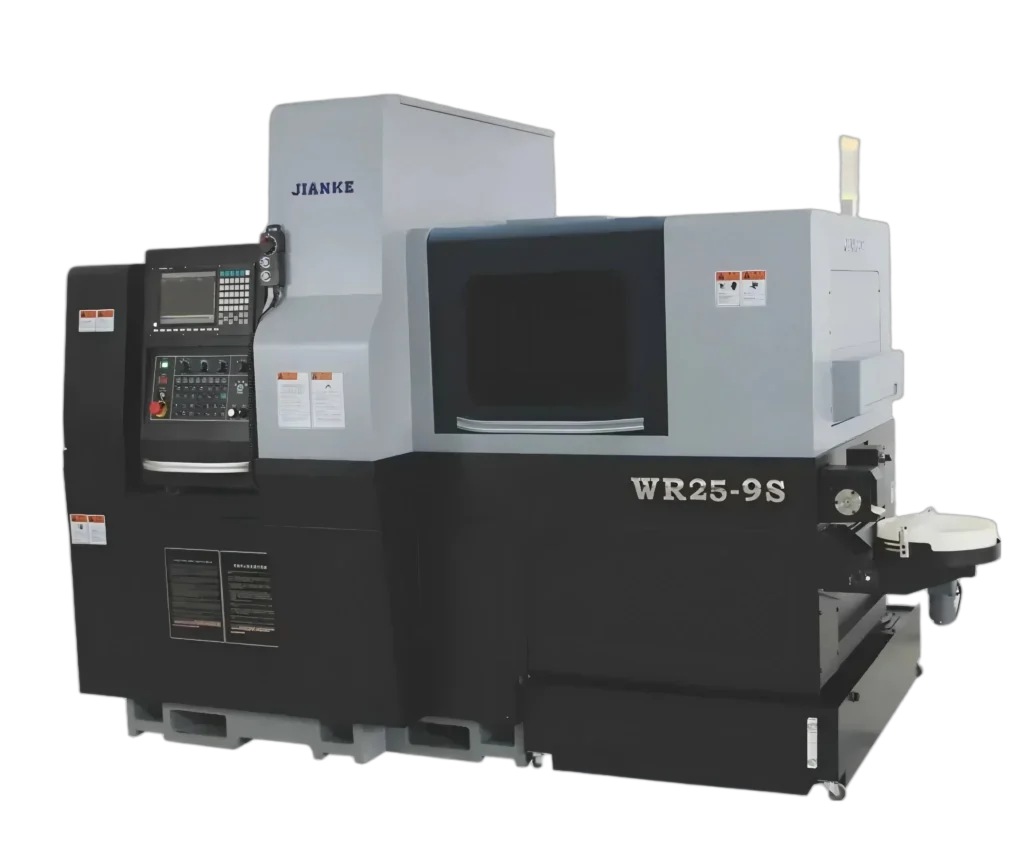
Swiss type CNC lathe is a special kind of precision lathe. It was originally designed for the watchmaking industry, but now it is widely used to process complex small and medium diameter parts that require extremely high precision. The workpiece is fed through the guide sleeve, and the cutting tool is close to the support point, which almost eliminates the deflection.
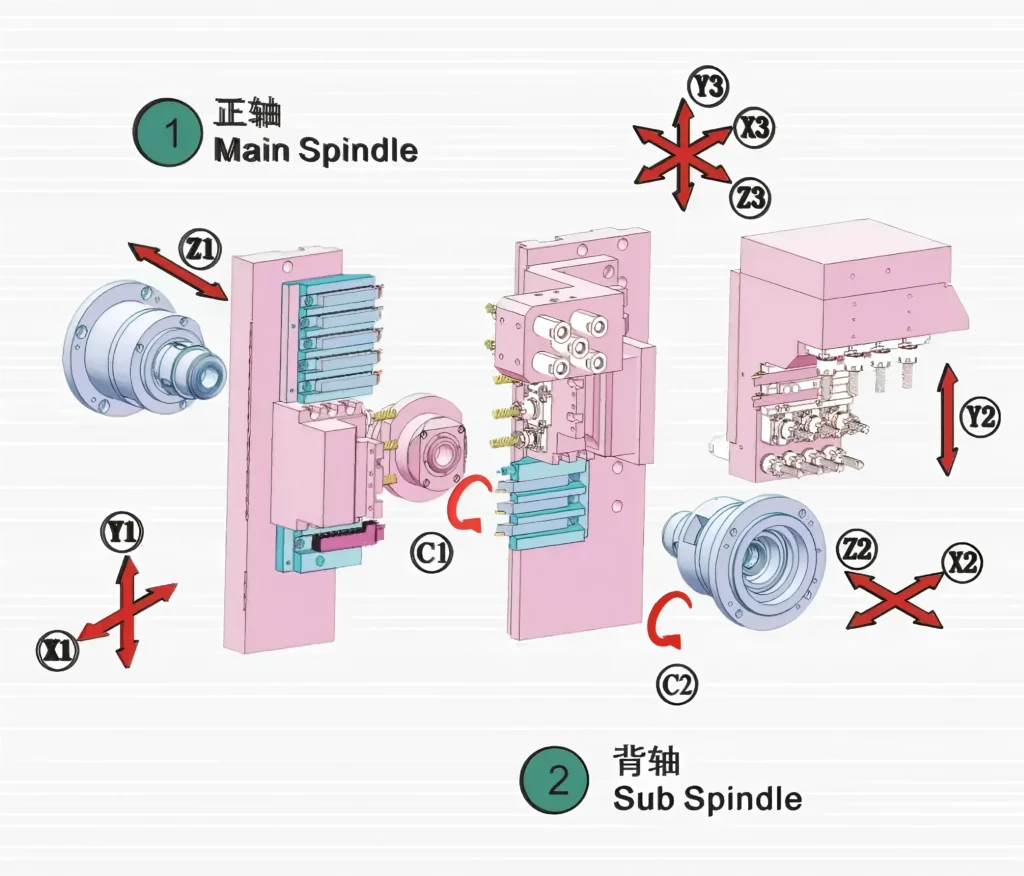
For manufacturers that need large-scale and high-precision machining, the W series Swiss type CNC lathe of Jianke Machinery is an ideal solution for high-complexity and high-precision turning. The guide sleeve support system is adopted in the W series, which almost completely eliminates the deflection of the bar, and can process slender and complex parts at one time, thus significantly reducing the fixture cost and processing cycle.
Advantages of W series CNC lathe in heavy processing applications:
- Two rows of tools at each side installed opposite independently, work at same time( milling +drilling and milling processing), achieve saving lots of time increase efficiency
- Sub spindle Y2 axis could achieve main spindle/sub-spindle work at same time
- Imported guide rail and screw could guarantee high accuracy and stability
Multifunctional/turn-milling composite CNC lathe
Turning, milling, drilling and tapping can be completed in one clamping. Reduce the number of workpiece handling, significantly shorten the production cycle of complex parts.
To learn more about CNC machining process, you can read the following articles :
CNC Milling and Turning: Which Process Do You Need?
CNC Drilling: 7 Best Tips For Achieving High Precision
Industry Applications: Advantage Areas of Heavy-Duty CNC Lathes
Heavy-duty CNC lathes play a vital role in many industries. The following is subdivided by industry:
| Industry | Typical Parts Machined | Key Requirements |
|---|---|---|
| Aerospace | Engine shafts, landing gear, turbine disks | Tight tolerances, exotic alloys (Ti, Inconel) |
| Oil & Gas | Drill collars, valve bodies, Christmas tree components | Large bore capacity, corrosion-resistant materials |
| Energy / Power | Generator rotors, turbine shafts, nuclear pressure vessels | Extreme workpiece mass, thermal stability |
| Shipbuilding | Propeller shafts, rudder posts, marine engine components | Long between-centers distance, heavy turning |
| Mining & Construction | Crusher rolls, hydraulic cylinders, pump shafts | Heavy stock removal, wear-resistant materials |
| Heavy Equipment | Axles, gearbox housings, hydraulic rams | Mixed material capability, high throughput |
| Automotive (EV/HV) | Motor shafts, brake discs, wheel hubs | High-volume precision, fast cycle times |
What Factors should be Considered when Purchasing Heavy-Duty Lathes?
Buying a heavy-duty lathe in the United States is a significant capital investment. Since you are looking for “heavy-duty” capabilities, the focus shifts from hobbyist features to industrial-grade rigidity, mass, and torque.
Rotary diameter and maximum turning diameter on the bed
The rotary diameter on the bed determines the maximum workpiece diameter that the machine can rotate without interference. Always increase the safety margin by at least 10-15 % on the basis of the expected maximum workpiece size. A machine with a nominal rotary diameter of 800 mm does not mean that you can reliably process 800 mm workpieces. The chuck jaw, center frame and end face tool all take up processing space.
JIANKE Tip: Check the rotation diameter on the bed and rotation diameter on the horizontal skateboard at the same time, the latter is usually 150-200 mm smaller than the former.
Distance between center
The distance between center determines the maximum workpiece length that can be accommodated between the spindle chuck and the tailstock of the machine tool. For shaft processing, especially in energy, shipbuilding and other industries, this is usually the most critical dimension parameter. If the length of the parts you need to process varies greatly, it is recommended to select a machine tool that supports modular bed extension.
Spindle power and torque
When evaluating the spindle performance of heavy-duty CNC lathes, don’t just look at peak power. For the processing of hard materials such as stainless steel, titanium alloy and inconel nickel alloy, the continuous torque at low speed is far more important than the maximum speed.
Rated (continuous) power vs. peak power: continuous output capability is the guarantee of hard cutting.
Low speed torque curve: especially in the rough car stage, it is necessary to examine the actual torque output in the 50-300 RPM range.
Spindle aperture: if you need to cooperate with the bar feeder or use the spindle internal cooling function, the aperture size directly determines the process feasibility.
For example, industrial-grade CNC lathes for rough turning large forgings often operate only at low speeds of 50-150 RPM, but their torque requirements can exceed 10,000 Nm. This is the real scale to judge the ability of heavy.
Rigidity and structure of machine tool bed
Rigidity is the basis of heavy machining accuracy. The key structural features to be evaluated include:
- Bed material: Mihanna cast iron (preferred) contrast welding steel structure
- Guide rail type: hardened grinding box guide rail (more suitable for heavy cutting) compared to linear guide rail (more suitable for high-speed machining)
- Thermal compensation: temperature compensation spindle bearing and finite element analysis to optimize the structure
- Bed width: wider bed can better resist bending moment in heavy cutting process
For large CNC turning centers, the bed castings should be subjected to stress relief and heat treatment before final processing to minimize long-term deformation.
CNC system
The choice of CNC system will affect programming, integration and long-term support. The three major industrial platforms are:
- FANUC: industry standard, with the most extensive support network, can operate stably in harsh environments
- Siemens SINUMERIK: European market preferred, with advanced workshop programming capabilities
- Mitsubishi M8: advantage in the Asian manufacturing market
Evaluate the compatibility of the control system with your existing CAM software, the familiarity of the maintenance team, and the local service infrastructure of the supplier. Ten years later, the availability of spare parts and service engineers is as important as the initial functionality.
Tool system and tool tower capacity
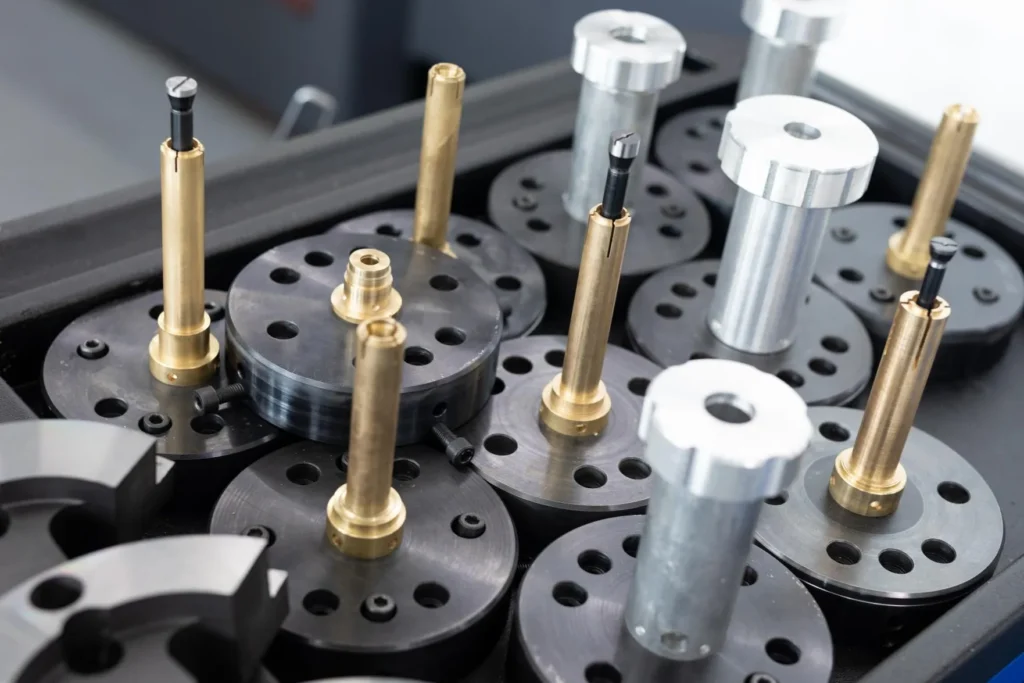
For heavy-duty CNC lathes that process various parts geometries, tool configuration directly affects production efficiency:
- VDI and BMT turret: BMT turret provides higher rigidity and is suitable for heavy milling; faster VDI replacement speed
- Number of stations: 8, 12 or 16 station turret, suitable for multi-process configuration
- Power tool: a necessary component for turn-milling machining, milling, drilling and thread processing without re-clamping.
- Tool holder size: match with the maximum tool diameter and overhang you expect to use
Learn more about live tooling on CNC lathes: Best Live Tooling on CNC Lathes: 7 Expert Tips to Maximize Precision
After-sales support, training and spare parts supply
This is the most easily underestimated but important factor in capital equipment procurement decisions. The investment of a heavy-duty CNC lathe is up to hundreds of thousands or even millions of dollars. The downtime cost of key production equipment is much higher than the initial price difference between suppliers.
Before signing the purchase order, please verify:
- Delivery cycle of key spare parts (servo drive, spindle bearing, turret motor)
- Availability of local or regional service centers
- Training plan for operators and maintenance personnel
- Warranty terms and conditions (machine warranty and wearing parts warranty) Software update and control system upgrade approach
Comparison of Technical Specifications: Light-Duty and Heavy-Duty CNC Lathe
| Specification | Light Duty CNC Lathe | Heavy Duty CNC Lathe |
|---|---|---|
| Swing over bed | 200–400 mm | 600–3,000 mm+ |
| Between centers | 500–1,000 mm | 1,500–10,000 mm+ |
| Spindle power | 5–15 kW | 22–150 kW+ |
| Max workpiece weight | 50–200 kg | 1,000–50,000 kg |
| Bed construction | Cast iron/welded | Stress-relieved Meehanite |
| Guideway type | Linear rail | Hardened box way or linear |
| Typical industries | Small parts, tooling | Aerospace, energy, marine |
How to Correctly Invest in Heavy-Duty CNC Lathes?
Choosing the right heavy-duty CNC lathe will affect the production capacity, quality stability and operating costs in the next few years. By carefully evaluating all seven purchase factors: turning ability, center distance, spindle power, machine tool rigidity, CNC system, tool system and after-sales support, manufacturers can confidently choose a machine tool that can bring the greatest return on investment.
Whether you’re equipping your new plant or upgrading older equipment, the new generation of heavy-duty CNC lathes, including dedicated solutions like Jianke Machinery’s W series CNC lathe, offer exceptional precision, reliability and versatility for the most demanding industrial turning applications.
FAQ
The standard CNC lathe is optimized for small and medium-sized parts of lightweight materials. Heavy-duty CNC lathes are equipped with more powerful spindles, reinforced bed structures, heavy-duty spindle bearings, and a larger processing range, enabling them to process large-diameter, high-quality hard material parts at production speed.
The rotary diameter of entry-level heavy-duty CNC lathes is typically between 600 and 800 mm, starting at about $ 80,000 to $ 150,000. Large industrial CNC lathes have a rotary diameter of more than 1500 mm, a long center distance, and are equipped with power tools. The price may range from USD 300,000 to more than USD 1 million. In addition, installation, tooling and training costs need to be considered.
Heavy-duty CNC lathes are designed to process a variety of materials, including low carbon steel, alloy steel, stainless steel, cast iron, aluminum, titanium alloy, Inco nickel alloy and other high temperature alloys, as well as hardened steel (using cubic boron nitride cutting tools). Material hardness directly affects the spindle power and rigidity requirements.
Preventive maintenance includes daily cleaning and lubrication of guide rails and ball screws, weekly checking of spindle bearing temperature, monthly checking of backlash and geometric accuracy, and full calibration by certified technicians every year. Proper maintenance can extend the life of the machine and maintain accuracy.
Swiss type heavy-duty CNC lathes are used for high-precision, high-volume turning of complex parts, especially slender parts such as medical implants, hydraulic joints, aerospace fasteners, watch parts and automotive sensor housings. The guide bushing system supports the workpiece in the cutting zone, enabling sub-micron tolerances for difficult-to-cut materials.