CNC metal lathe is a machine tool, which combines the centuries-old rotary turning principle with computer precision control to improve the machining accuracy, repeatability and productivity to a new level. Whether you ‘re an enthusiast looking for a small metal lathe, a factory owner evaluating metal lathes for production, or a senior technician looking for advanced operating skills, you can learn the types of CNC metal lathes and seven proven efficiency-enhancing technologies in this article.
Types of CNC Metal Lathes
Before deciding to purchase any CNC metal lathe for sale, you must first match the machine size and configuration to the actual processing requirements.
Small CNC Metal Lathe
The maximum rotary diameter of a small metal lathe is usually 200 ~ 350 mm, and the length of the bed is 500 ~ 1,000 mm.
- Small machining plant to undertake maintenance and prototype processing
- Sub-contractors for small parts in the aerospace and automotive industries
- Gun production (gunsmithing) and weapon parts processing
The mini metal lathe configured as CNC can achieve far more functions than manual operation, especially in thread machining (requires precise synchronization of the spindle and feed), taper turning and multiple feed contour machining.
Full-size Industrial CNC Metal Lathe
Industrial-grade CNC metal lathes range from the turning center with a maximum turning diameter of 400 ~ 600 mm and a tip-to-tip distance of 1 ~ 2 m to heavy-duty CNC lathes that can process rolls, shafts and pressure vessels of several meters in length. Typical configurations of such machines include:
- Live tooling turret: milling operations can be completed without re-clamping.
- Sub-spindle: complete all the processing of the front and rear ends of the workpiece in one clamping.
- High-pressure coolant system (HHPCS)
- Automatic bar feeder: realizing lights-out production
Top CNC Metal Lathe Recommended: JIANKE Z Series Swiss Type Lathe

Features of JIANKE CNC lathe:
Dual-spindle independent drive, supports synchronous processing: equipped with two independent spindles, each spindle can independently perform processing operations. The two spindles can realize synchronous operation and collaborative processing of the workpiece, which greatly improves the processing efficiency.
The standard alignment device ensures the concentricity of the inner and outer circles: the built-in alignment (centering) device can control the concentricity of the inner and outer circles of the workpiece in real time during the machining process, effectively ensuring the high-precision machining requirements.
Flexible processing mode, single/double spindle on-demand switching: with a high degree of flexibility, according to different process requirements to choose a single spindle or double spindle processing mode, to adapt to a variety of parts production.
Optional guide sleeve/movable guide sleeve, free to adapt to the workpiece: support optional guide sleeve or movable guide sleeve, switch according to the characteristics of the workpiece, expand the process range of the machine tool.
The oil-cooled motorized spindle has more uniform cooling and more stable operation: the oil-cooled motorized spindle has more uniform cooling than the air-cooled motorized spindle; compared with the mechanical spindle, it has higher stability and is suitable for long-term continuous processing.
Absolute value motor, power-off memory origin, time-saving and labor-saving: equipped with absolute value motor, the machine automatically remembers the origin position when the machine is turned on/off, no need to repeat the zero return operation, time-saving, worry-free, and reduce manual intervention.
Key Differences: CNC vs. Manual Lathe Machine
| Feature | CNC Metal Lathe | Manual Lathe Machine |
|---|---|---|
| Control | Computer (G-code) | Hand cranks and levers |
| Repeatability | ±0.001 mm or better | Operator-dependent |
| Setup Time | Longer (programming) | Shorter for one-offs |
| Production Volume | High | Low to medium |
| Skill Requirement | Programming + machining | Hands-on machining skill |
| Ideal Use Case | Batch production, complex profiles | Prototyping, repair work |
Understanding the above differences helps to determine whether CNC lathes or manual metal lathes are more in line with your workflow before browsing any metal lathe for sale information.
7 CNC Metal Lathe Technologies: Comprehensively Improve Processing Efficiency
The following 7 technologies are the persistent gaps between high-output CNC plants and ordinary plants. Each technology is aimed at a specific problem in the CNC metal lathe machining process.
CSS,constant surface speed cutting
One of the most influential functions of CNC metal lathes is the constant surface speed (CSS) mode, which is the G96 instruction in the standard G-code. Unlike running with a fixed RPM, CSS automatically adjusts the spindle speed when the metal lathe tool is close to or away from the center of the workpiece, so that the cutting speed at the tool tip remains constant throughout the cutting process.
Why is constant surface speed so important? Because it can significantly improve the tool life and make the surface roughness more uniform. And because it is always processed at the best cutting speed, the cycle time is also shortened.
The recommended cutting speed of each material (reference starting value, cemented carbide tool):
- Mild steel: 120 ~ 180 m/min
- 304 stainless steel: 60 ~ 100 m/min
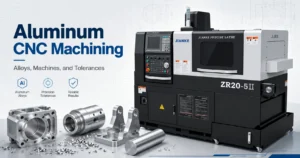
- Aluminum: 300 ~ 600 m/min
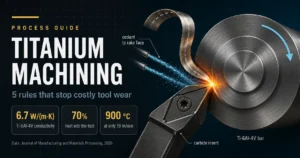
- Titanium: 30 ~ 60 m/min
Please be sure to use the data provided by the manufacturer of the metal lathe tool, and adjust it according to the chip color and the actual surface effect.
High-pressure coolant (HPC) supply
The standard flood coolant can wash away the chip and reduce the overall temperature, while the high-pressure coolant (HPC, usually 70 ~ 150 bar) is accurately fired into the cutting zone, which can break the chip before accumulation, extend the life of the carbide insert by 2 ~ 4 times, and allow deeper cutting with higher feed rate.
If your CNC metal lathe supports HPC, it should be enabled in the following applications:
- Difficult-to-machine materials (titanium alloy, Inconel alloy, hardened steel)
- Deep grooving and parting operations Deep grooving and parting operations
- The critical process of chip evacuation in long hole drilling
For factories that are evaluating metal lathes for sale, HPC is a priority configuration when processing any super alloy or special alloy.
Optimize the tool path: rough + finish pass strategy

Efficient CNC metal lathe programming almost always separates roughing from finishing, rather than trying to reach the final size in a single tool.
- Roughing pass: high feed rate (0.3 ~ 0.5 mm/rev), large cutting depth (2 ~ 5 mm), diameter direction allowance 0.3 ~ 0.5 mm.
- Semi-finish pass (optional): medium feed (0.15 ~ 0.25 mm/rev), cutting depth 0.5 ~ 1 mm, allowance 0.05 ~ 0.1 mm.
- Finishing pass: low feed (0.05 ~ 0.1 mm/rev), minimum cutting depth (0.05 ~ 0.1 mm), new blade or special finishing geometric angle blade.
Above structured approach to metal lathe tool usage prolongs insert life by reserving fresh cutting edges for critical finish passes and allows roughing to run aggressively without risking the final surface.
Live tooling & Y-axis operations
A modern CNC turning center equipped with a live tooling (i.e., a rotatable milling tool mounted on a turret) enables CNC metal lathes to complete milling, drilling, cross-drilling, and slotting operations without transferring the workpiece to an independent machining center.
Benefits:
- Eliminating re-fixturing: this is the main source of position errors
- Reduces total cycle time and work-in-progress (WIP) inventory
- A one-time clamping completion is achieved on a small metal lathe level turning center.
- Common power tool operations on CNC metal lathes include: hex flat, cross-drilled hole, keyway slot, off-center feature and thread milling.
TNRC,tool nose radius compensation,G41/G42
Each metal lathe tool blade has a nose radius, typically 0.2, 0.4, 0.8, or 1.2 mm. When CNC metal lathes perform bevel or curved surface contour processing, the actual cutting point will deviate from the programming path, unless the tool nose radius compensation (TNRC) is activated by G41 (left compensation) or G42 (right compensation).
Ignoring TNRC will lead to dimensional errors on the taper, radius and chamfer, and the deviation is sometimes as high as the complete tip radius value. After the compensation is activated, the lathe machine will automatically shift the tool path and output accurate geometric shapes even on complex surface contours.
Sub-Spindle & Part Catcher Automation
For parts that need to be processed at both ends, a CNC metal lathe equipped with a sub-spindle can clamp the finished front end surface, automatically reverse the workpiece, and complete the back processing in the same program, completely eliminating the second clamping.
With the part catcher or conveyor belt, the automatic processing flow can be formed, and the lathe can be realized:
- Automatic feeding from bar feeder (bar feeder)
- Complete all the processing of the front end surface
- Transfer the workpiece to the sub-spindle
- After the completion of the end face all processing
- Automatically pop up finished parts
For high-volume metalworking lathes, this single function can increase productivity to two to three times that of a single-spindle lathe machine that requires manual turning of the workpiece.
In-process gauging & adaptive control
The most advanced CNC metal lathe technology is closed-loop dimensional control: the touch probe or post-process gauge measures the workpiece during or immediately after the machining process, and the CNC controller automatically adjusts the tool offset based on the measurement results. In order to correct the size drift caused by tool wear, thermal expansion or material variation.
Benefits:
- Substantial reduction of scrap and rework
- Achieve unattended lights-out night machining of lathes
- Automatic tool wear compensation for metal lathe tool inserts, using the inserts to their true limits instead of the conservative planned tool change intervals
- Provide data tracking records required for quality documents to support continuous process improvement.
How to Choose the CNC Metal Lathe Tool and the Tool System?
No CNC metal lathe can exceed the capacity limit of its tool itself. Insert grade selection:
- P-grade (blue): steel and cast iron
- M-grade (yellow): stainless steel and heat-resistant alloy
- K-grade (red): cast iron, hardened material
- N-grade (green): non-ferrous metals (aluminum, copper, brass)
- S-grade (brown): heat-resistant superalloys and titanium
| System | Advantage | Best For |
|---|---|---|
| VDI Turret Holders | Fast indexing, very rigid | Production CNC metal lathe |
| Capto/HSK-T | Highest rigidity, modular | Heavy-duty machining |
| Quick-Change Tool Post | Easy swap for manual/small CNC | Small metal lathe, prototyping |
| BMT Turret | Live tooling integration | Mill-turn machines |
For mini metal lathes or small metal lathes in hobby-level or light production environments, Aloris or Dorian quick tool change turret systems can provide sufficient flexibility at a cost much lower than that of full turret systems.
How to Maintain Your CNC Metal Lathe?
A well-maintained CNC metal lathe can provide stable accuracy for decades. The core maintenance tasks are as follows:
- Daily: check and supplement coolant concentration; cleaning the chip conveyor and the chip in the working area; check the tool edge wear of the metal lathe tool.
- Weekly: lubrication guideway, ball screw and tool tower according to the manufacturer’s plan; check the spindle lubricating oil level; cleaning filter
- Monthly: use test bar and dial indicator to verify geometric accuracy; check chuck jaw wear and tear
- Every year: a comprehensive accuracy audit; replace the coolant; check the spindle bearing; calibration of CNC controller parameters
Ignoring guideway lubrication is the most common single reason for premature loss of accuracy of all lathes.

Conclusion
The core principles of choosing a CNC metal machine are consistent: understanding machine capabilities, choosing the right metal machined tool system, using proven efficiency techniques for intelligent programming and strict daily maintenance.
When evaluating any CNC metal lathe for sale, please match the machine specification with the actual workpiece envelope and production batch, give priority to the controller and after-sales service, and regard tool selection as an investment rather than a simple cost control project.