When global manufacturers evaluate the investment in the next turning center, JIANKE Swiss type CNC lathe is always at the top of the list of candidates. Whether you are operating a large number of medical parts processing plants, aerospace subcontractors or precision electronic component suppliers, the selected machine tool will directly determine the quality of the parts, throughput and final profit. In 2026, JIANKE established its position as one of the world’s most trusted brands in the field of Swiss-style CNC turning – for good reason.
This guide will delve into seven core reasons why global manufacturers in Asia, Europe, and North America continue to invest in JIANKE Swiss CNC lathes, covering the types of users the machine is best suited for, the comparative analysis with major competitors, and the most frequently asked questions by buyers before placing a formal order.
Why is 2026 the best time to invest in Swiss Type Lathe?

Supply chain volatility, nearshoring trends and increasingly stringent quality standards are pushing manufacturers to internalise more precision turning processes. At the same time, global labour costs continue to rise, making the value of automation – the core feature of Swiss-type turning – even more prominent.
JIANKE Swiss type CNC lathe directly responds to the above pressure with machine design: supports lights-out operation, multi-axis simultaneous cutting and is compatible with mainstream CAM platforms. If you’re still using a traditional lathe or outsource micro-precision turning to a third party, 2026 is the best window to evaluate the upgrade plan.
Reason 1: Sub-micron precision, meeting medical and aerospace standards
The core advantage of any Swiss-type lathe is accuracy, and the engineering design of the JIANKE Swiss-type CNC lathe can control the positional accuracy within ± 0.002 mm, which runs through the entire batch production process, not limited to the sample stage.
Key technical paths for JIANKE to achieve this accuracy include:
- Hardened and precision-ground guideways: can withstand millions of processing cycles of wear tests.
- Tsarin ramuwa na thermal: real-time offset the influence of spindle heat accumulation on accuracy in long processing shifts.
- High-rigidity C-axis control: precise angular positioning for complex turning profiles.
- Guide bushing support: for workpieces with a diameter of 1 mm to 32 mm, deflection is almost completely eliminated.
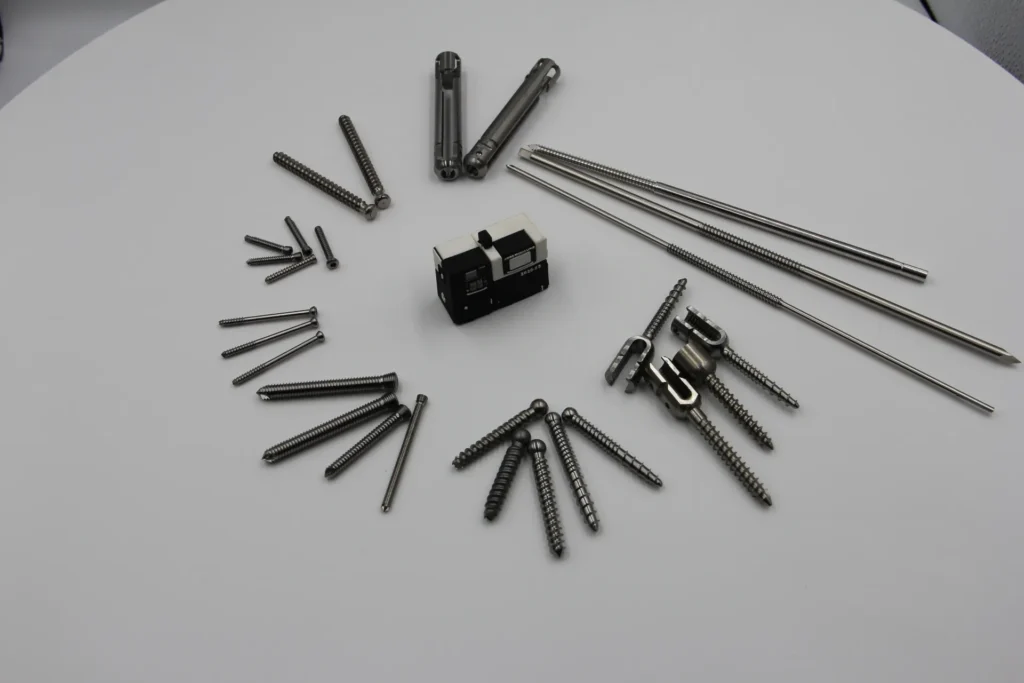
This level of accuracy is not a luxury for manufacturers of medical parts certified to ISO 13485 (Medical Device Quality Management System Standard), or aerospace assemblies certified to AS9100 (Aerospace Quality Management System Standard) – it is a mandatory requirement for qualification certification. JIANKE’s precision CNC machining capability enables you not only to stably meet these standards, but also to fully record compliance data for audit.
Reason 2: High-speed simultaneous machining, greatly reducing cycle time
The speed without precision support is meaningless; accuracy without speed guarantee is not profitable. JIANKE Swiss CNC lathes combine the two by means of true multi-axis simultaneous cutting.
Most JIANKE Swiss-type turning centers support up to 7 axes of simultaneous motion that allow the main spindle, sub-spindle and live tooling to run simultaneously. This means that the processes that require three independent clampings on a traditional lathe – turning, drilling and slotting – can be completed in a single cycle.
Main performance highlights:
- Main spindle speed up to 10,000 RPM: for high-speed turning of brass, aluminum and stainless steel.
- Live tooling stations: support milling, cross-drilling and thread milling without re-chucking.
- Sub-spindle for back-working: back-working can be completed without the second process.
- Matsakaicin saurin wucewa: minimize the non-cutting time between processes.
In real production environments, customer reports show that after switching to the JIANKE Swiss-type turning center, the cycle time can be reduced by 30-50 % compared to traditional multi-clamping turning.
Reason 3: Robust machine construction, chatter reduction and tool life extension
Chatter is an invisible damage of precision CNC machining. Even if the technical specifications of a machine tool are excellent, once its casting structure and rigid design are defective, chatter will still occur during heavy cutting, resulting in a serious decline in performance.
JIANKE Swiss type CNC lathe uses Meehanite cast iron base, which is recognized as a high-quality material in the field of precision machine tool manufacturing. It is known for its excellent vibration-damping properties and long-term dimensional stability.
Main structural advantages include:
- The maximum stiffness-to-weight ratio is achieved by finite element analysis optimized bed casting.
- All guide joint surfaces are processed by precision-scraped mating surfaces.
- The hydraulic system and cooling system are isolated from each other to prevent thermal contamination from affecting the accuracy of the machine tool bed.
Actual production benefits: longer cutting tool life, better surface finish (Ra value can be stabilized below 0.4μm) and lower scrap rate. For manufacturers using expensive carbide tooling to process hard materials, the investment cost of machine tools can often be recovered in the first year only if the tool life is extended.
Reason 4: Full automation and feeding capabilities, to achieve lights-out production
Labor cost is the largest variable cost in most processing workshops. JIANKE Swiss type CNC lathe has been designed from the outset for automated, unattended operation – allowing an operator to manage multiple machines in parallel production at the same time.
The standard or optional automation features of the JIANKE Swiss-type turning center include:
- Bar feeder compatibility: support LNS, IEMCA and other mainstream brands of feeders to achieve bar-fed CNC lathe operation.
- Automatic parts catcher: equipped with a configurable sorting tank to achieve automatic separation of qualified and unqualified products.
- Matsakaicin lalacewa ta atomatik: automatic compensation of tool wear by probing cycles.
- Chip conveyor integration: continuous removal of chips during long-term production operation. Ikon saka idanu mai nisa: through the OPC-UA data output interface, it is seamlessly integrated with the manufacturing execution system (MES) and Industry 4.0 platform.
The JIANKE Swiss type lathe equipped with a feeder can run continuously unattended for 8 to 16 hours according to the length of the bar and the size of the parts. This essentially unlocks the capacity of the third shift without having to bear the labor cost of the third shift-in a market with higher labor costs, which is the decisive competitive advantage.
Reason 5: Widely compatible with the mainstream CAM software and CNC control system
The maximum capacity of the machine depends on the program you can run on it. JIANKE Swiss type CNC lathe is equipped with FANUC or Mitsubishi CNC control systems – two of the most widely used and documented platforms in the world’s precision machining field, ensuring that your programming team can be immediately put into efficient production without retraining.
CAM software compatibility covers all mainstream platforms:
| CAM software compatibility table | ||
|---|---|---|
| CAM Platform | Swiss-Type Post-Processor | Guide Bushing Support |
| Jagora | √ Available | √ |
| GASKIYA | √ Native | √ |
| HyperMILL | √ Available | √ |
| SolidCAM | √ Available | √ |
| Fusion 360 | √ Available | M |
Extensive ecosystem compatibility means that you will not be bound to proprietary software, and existing CAM investments can be fully reused on the JIANKE platform.
Reason 6: Competitive pricing, no compromise on Swiss-grade quality
The traditional European brand of Swiss-type turning center, the full configuration of the machine is often as high as USD 150,000 to USD 400,000. JIANKE Swiss type CNC lathe has 35-55 % lower acquisition cost and no compromise on core components under the premise of comparable precision performance.
How does JIANKE realize this value equation?
Hadin kai tsaye: JIANKE independently designs and produces key components to eliminate supply chain markups.
Optimized manufacturing processes: lean production systems and economies of scale in the Asia-Pacific region.
Strategic component sourcing: FANUC CNC system, NSK spindle bearings and other Tier-1 suppliers to purchase parts on a large scale.
No legacy overhead: JIANKE’s engineering R&D resources focus on contemporary models rather than maintaining historical platforms decades ago.
Lower procurement costs also mean faster investment recovery. Based on a typical production scenario running 16 hours a day, most JIANKE customers can achieve a return on investment of machine tools within 18 to 30 months – much faster than the recycling cycle of similar European branded machines.
Reason 7: Comprehensive after-sales support, training system and global spare parts access
The purchase price of machine tools is only a part of the total cost of ownership. Unplanned downtime caused by service response delay or spare parts shortage is often more expensive than any initial procurement savings.
The after-sales service system of JIANKE is designed to continuously ensure the stable operation of machine tools:
- Dedicated application engineers: have specialized knowledge of Swiss machine tools and provide programming and machine adjustment support.
- Online and on-site installation and commissioning: new machine purchase includes commissioning and acceptance service.
- Operator and maintenance training programs: Chinese and English versions are available, and other languages can be customized on demand.
- Global spare parts warehouse: the key vulnerable parts are shipped on the same day.
- Ƙarfin bincike mai nisa: quickly locate faults through the FANUC/Mitsubishi telemetry interface without on-site visits.
- Comprehensive machine documentation: covering complete electrical schematics, hydraulic diagrams and parts manuals.
JIANKE’s after-sales service system is particularly prominent among customers in Southeast Asia, South Asia and Eastern Europe. These regions have long lacked Swiss type CNC lathe localization professional support resources.
Which Companies Should Consider JIANKE Swiss Type Lathe?
JIANKE Swiss-type turning center serves a wide range of manufacturers and processing workshops. If you fit any of the following typical user portraits, this machine will be an excellent choice.
Masu ƙera Na'urorin Lafiya
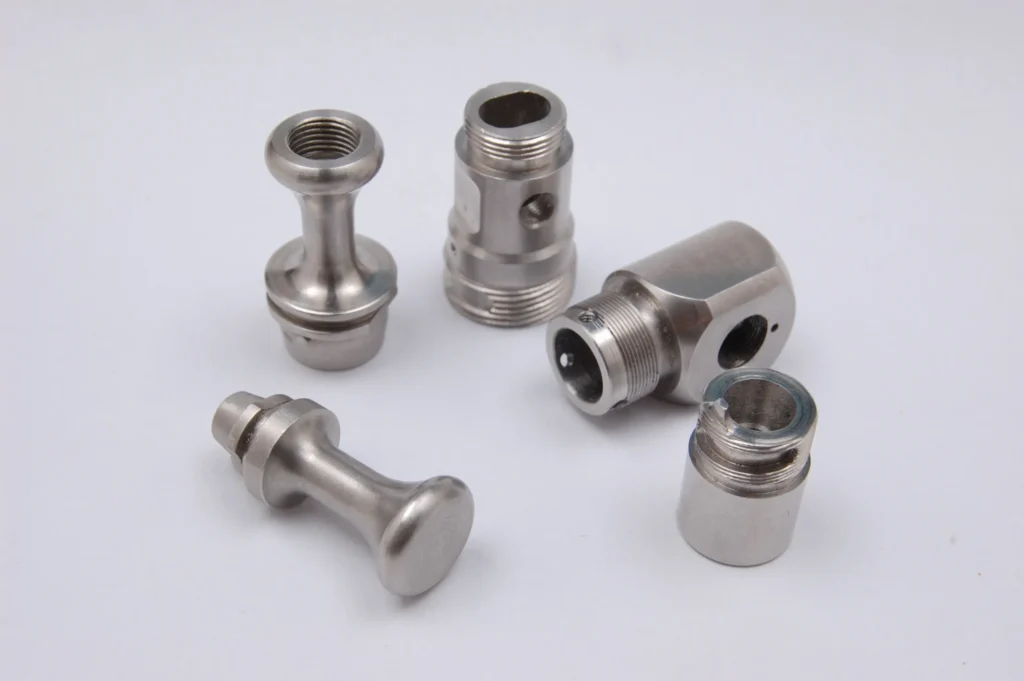
Do you need to produce bone screws, cannulas, dental implants or surgical instrument parts? JIANKE’s precision CNC machining capability can meet the requirements of ISO 13485 medical environment for tight tolerances and surface finish.
Aerospace and Defense Subcontractors
Slender fasteners, connector pins and hydraulic fittings with strict requirements for concentricity and roundness are ideal application scenarios for Swiss machining. The JIANKE machine tool can stably meet the tolerance requirements of AS9100 in mass production.
Electronics and Semiconductor Hardware Producers
The miniature connectors, contact pins and sensor bodies of copper, brass and aluminum materials can be efficiently produced with the help of JIANKE high-speed spindle and live tooling.
Job Shops Seeking to Expand Capabilities
A JIANKE Swiss type CNC lathe allows the integrated processing plant to enter the precision contract market that was previously unavailable due to the lack of Swiss-type equipment. Competitive procurement costs significantly reduce the business risk of capacity expansion.
High-Volume Automotive Suppliers
Fuel injection nozzle, ABS sensor parts and transmission shafts can directly benefit from JIANKE ‘s simultaneous multi-axis cutting and bar-fed automation capabilities.
| Table of JIANKE Swiss CNC Lathe vs. Competing Brands | |||
|---|---|---|---|
| Factor | JIANKE | European Brand A | Asian Competitor B |
| Matsayi na Gaskiya | ± 0.002 mm | ± 0.001 mm | ± 0.003 mm |
| Control System | FANUC/Mitsubishi | Proprietary/Siemens | FANUC |
| Max Bar Diameter | Har zuwa 32mm | Upto 38mm | Har zuwa 26mm |
| Rage Farashin (USD) | $80K- $160K | $200K- $400K | $60K- $100K |
| Bayan-Tallafin Tallafi | Global | Yanki (Mayar da hankali na Turai) | Limited |
| CAM Compatibility | Gyara | Gyara | Limited |
| Lokacin Bayarwa | 8-14 makonni | 16-28 makonni | 10-18 makonni |
Specification parameters are only for reference that depend on the model configuration. Please contact the JIANKE sales team for specific model comparison.
Why is JIANKE the Wise Choice to Invest in Swiss Type Lathe in 2026?
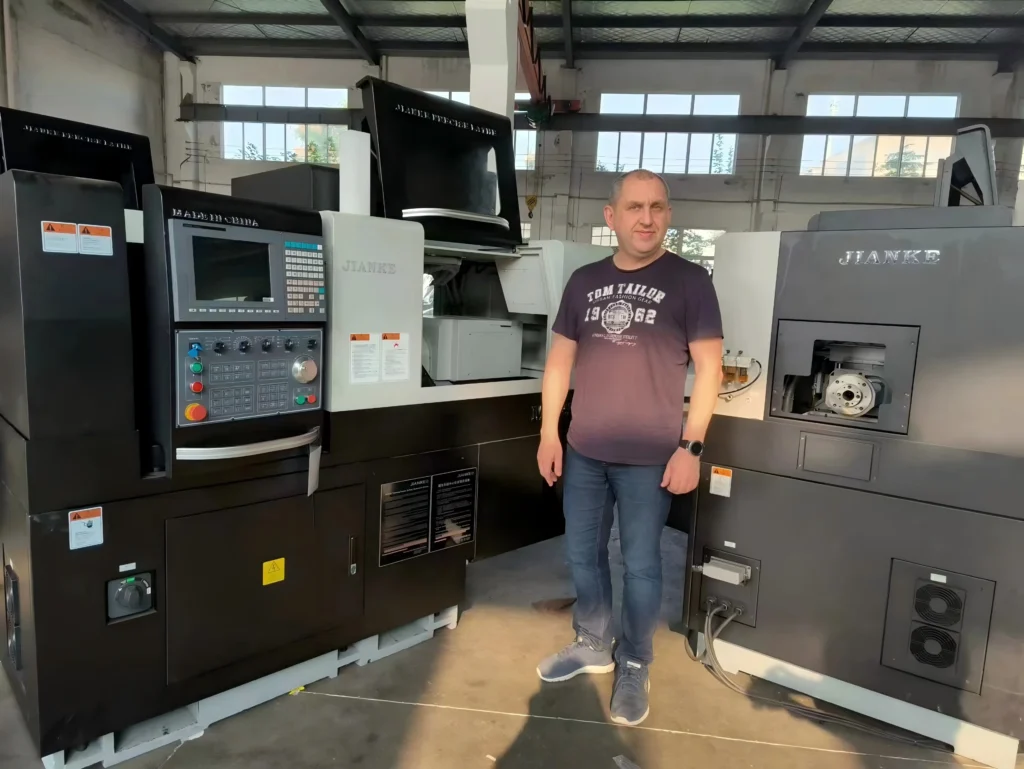
JIANKE Swiss type CNC lathe offers an extremely rare combination of capabilities that manufacturing procurement decision-makers find difficult to find simultaneously on a single platform: true sub-micron precision, multi-axis simultaneous cutting, full automation capability, and broad software compatibility. The return on investment procurement cost can be achieved within two years in most production environments.
Whether you are a growing integrated processing plant, a professional manufacturer of medical parts, or a large-scale auto parts supplier, JIANKE’s Swiss-type turning center is committed to bringing quantifiable competitive advantages to your factory in 2026 and beyond.
If you are evaluating the Swiss type lathe scheme, it is recommended to request a detailed technical specification from the JIANKE application engineering team and use your actual part geometry for trial machining verification. The data will give the most powerful answer.
FAQ
Most JIANKE Swiss-type turning centers can handle bar stock with diameters from 1 mm to 32 mm, covering the application requirements of most precision turning components.
Support. Many JIANKE models provide a guide bushless operation mode, which is suitable for processing short and thick parts-the problem of material waste generated by such parts in the guide sleeve area needs to be considered. The operator can switch the configuration between the two modes.
Installation and commissioning of new machines including feeder integration usually takes 3 to 5 working days, and JIANKE application engineers can provide on-site or remote technical support.
Very suitable. JIANKE’s comprehensive training courses, comprehensive technical documentation and FANUC-based CNC system enable the processing workshop that transforms from conventional CNC turning to smoothly cross the learning curve for the first time.
Medical devices, aerospace, electronics, automotive and watchmaking are the core markets of JIANKE – precisely the most demanding industries for Swiss type lathe precision.