Longitudinal turning is a fundamental operation in machining, involving the cutting tool moving parallel to the workpiece’s rotational axis to remove material efficiently. It is widely applied in industries that require precision cylindrical parts, such as automotive, aerospace, and mold manufacturing.
Longitudinal turning allows manufacturers to optimize machining efficiency, maintain tight tolerances, and reduce production costs.
Basic Principles
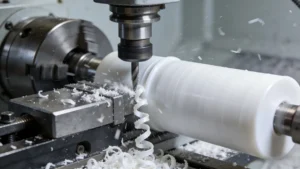
In longitudinal turning, the cutting tool moves along the axis of rotation of the workpiece, producing long, cylindrical surfaces efficiently. There are two main types:
- Side Turning: The tool moves radially, ideal for machining external cylindrical surfaces.
- Face Turning: In this operation, the tool moves parallel to the workpiece axis to trim material from the end surface. It is primarily used to achieve smooth, flat finishes and to accurately machine shoulders.
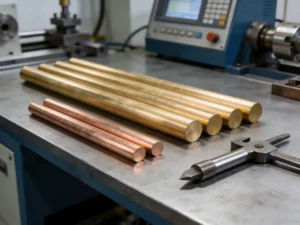
Machining a long steel shaft requires side turning to reduce diameter along its length, while face turning squares off the ends for assembly.
Applications
Longitude turning offers broad applicability and is widely employed in various manufacturing sectors:
- Automotive Manufacturing: Engine shafts, axles, and drive components require precise cylindrical features. Longitudinal turning ensures uniform diameters and tight tolerances.
- Aerospace: Turbine shafts, structural rods, and other cylindrical components benefit from high precision and complex contouring.
- Mold Making: Deep cavities and cylindrical mold parts can be machined efficiently, reducing setup time and improving surface quality.
Advantages and Challenges
Advantages
- Efficient Material Removal: Parallel cutting reduces idle movements and ensures uniform surfaces.
- Adaptability for Complex Geometries: Longitudinal turning handles long shafts, stepped diameters, and deep grooves.
- High Productivity: Fewer setups compared to alternative methods, saving labor and time.
- Better Surface Quality: Consistent cutting along the axis produces smoother finishes, reducing the need for secondary operations.
Challenges
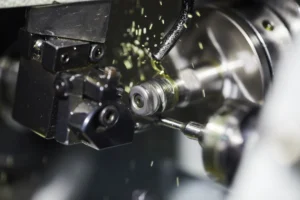
- Chip Evacuation: Deep groove machining can result in chip accumulation, potentially affecting surface quality.
- Tool Wear: Continuous axial cutting increases wear, necessitating proper tool selection and maintenance.
To know its benifit and disadvantage will alert us to use high-pressure coolant or chip breakers to manage chip buildup, extend tool life, and maintain surface quality, particularly for long shafts or deep grooves.
Conclusion
Longitudinal turning offers a highly adaptable and productive method for machining cylindrical workpieces, extended shafts, and parts featuring intricate grooves. By understanding its principles, applications, advantages, and challenges, you can optimize cutting parameters, improve productivity, and maintain high precision.
While challenges such as chip management and tool wear exist, proper techniques, tooling, and coolant use make longitudinal turning indispensable in modern machining operations.