Five-axis CNC machines is not simply a technological upgrade, but a fundamental shift in the manufacturing paradigm. From aerospace to medical device manufacturing, all walks of life rely on five-axis CNC machine tools to produce parts with complex geometries, strict tolerances, and excellent surface finish. Otherwise, these parts will require multiple setups, multiple fixtures, and a lot of extra working hours. As part costs and delivery cycles continue to compress, mastering how to select, operate, and apply such machine tools has become a necessary ability for modern machinists, workshop managers, and procurement professionals.
Difference between Three-axis, Four-axis CNC Five-axis Machines
ເຄື່ອງຈັກ CNC ຫ້າແກນ are advanced manufacturing tools that move a cutting tool or workpiece along five different axes simultaneously-the standard linear X, Y, and Z axes, plus two additional rotational axes (typically A and B or C). This capability allows for the machining of complex, multi-sided parts in a single setup, which significantly improves precision, reduces manual labor, and shortens production cycles.
Before investing in 5-axis machining, it is necessary to accurately understand the respective capability boundaries of the three generations of machine tools. The following table compares the three main models horizontally:
| Comparison table of five-axis and three-axis, four-axis CNC machining | |||
|---|---|---|---|
| ຄຸນນະສົມບັດ | 3-ແກນ | 4-ແກນ | 5-ແກນ |
| Axes of movement | X, Y, Z | X,Y,Z+A | X,Y,Z+A+B |
| Part setups needed | ຫຼາຍ | ນ້ອຍກວ່າ | Often just one |
| Surface accessibility | ຈໍາກັດ | ປານກາງ | Near-complete |
| ເລຂາຄະນິດທີ່ຊັບຊ້ອນ | ຄວາມຫຍຸ້ງຍາກໃນ | ປານກາງ | ທີ່ດີເລີດ |
| ຄວາມທົນທານໂດຍປົກກະຕິ | +0.005in | +0.003 ໃນ | +0.001 in or better |
| ຄ່າໃຊ້ຈ່າຍໃນລະດັບ | $15K-$80K | $30K-$120K | $100K-$500K+ |
| ທີ່ດີທີ່ສຸດສໍາລັບ | Flat/prismaticparts | ຊິ້ນສ່ວນໝຸນ | Complex 3D forms |
The core advantage of multi-axis CNC machining is to greatly reduce the number of clamping times. Each time the machinist repositions the workpiece, it will accumulate the tool setting error and push up the labor cost. The five-axis CNC machine tool fundamentally eliminates this problem and makes it the preferred solution for the manufacture of high-precision and high-value-added parts.
Types of Five-axis CNC Machine Configurations
Not all five-axis CNC machine tools adopt the same structural layout. There are three main kinematic configurations at present. It is very important for both operators and purchasers to understand these three configurations.
Table/Table (Trunnion Style)
The two rotation axes are integrated on the worktable of the machine tool. The spindle is kept fixed in the rotation direction, and the workpiece is tilted and rotated with the worktable. This configuration has excellent rigidity and is especially suitable for large-mass workpieces.
Head/Head (Swivel Spindle)
The two rotary axes are located on the Spindle Head, and the worktable remains fixed. This configuration is most suitable for super-large workpieces that cannot be easily turned over, such as aerospace structural plates. Mandelli and Forest-Liné are representative brands of these models.
Table/Head (Combined)
One rotation axis is located on the workbench, and the other rotation axis is located on the spindle head. It is the most common configuration on the market at present, and has achieved a good balance between processing accessibility and machine tool rigidity. In the selection, the most matching configuration should be selected according to the geometric shape, quality and the required space reachable angle of the workpiece.
How to Operate a CNC Machine: 7-Step Guide to Five-Axis Machine
Operating a CNC machine involves a structured process: designing a part in CAD, converting it to G-code (CAM), setting up the machine (tooling/workpiece), and running the program safely. Essential steps include powering on, homing axes, setting work/tool offsets, and running a dry run to prevent crashes.
Review the part drawing and determine the processing strategy
The CAD model and engineering drawings should be studied in depth before motivation. Identify all key features, tolerances and surface finish requirements. It can be judged which features can be completed in one clamping under the condition of simultaneous 5-axis, and which can meet the requirements by 3+2 directional machining (positioning the rotating shaft to a fixed angle and then using three-axis cutting). This planning stage can effectively avoid subsequent high-cost rework.
Tool selection and preparation
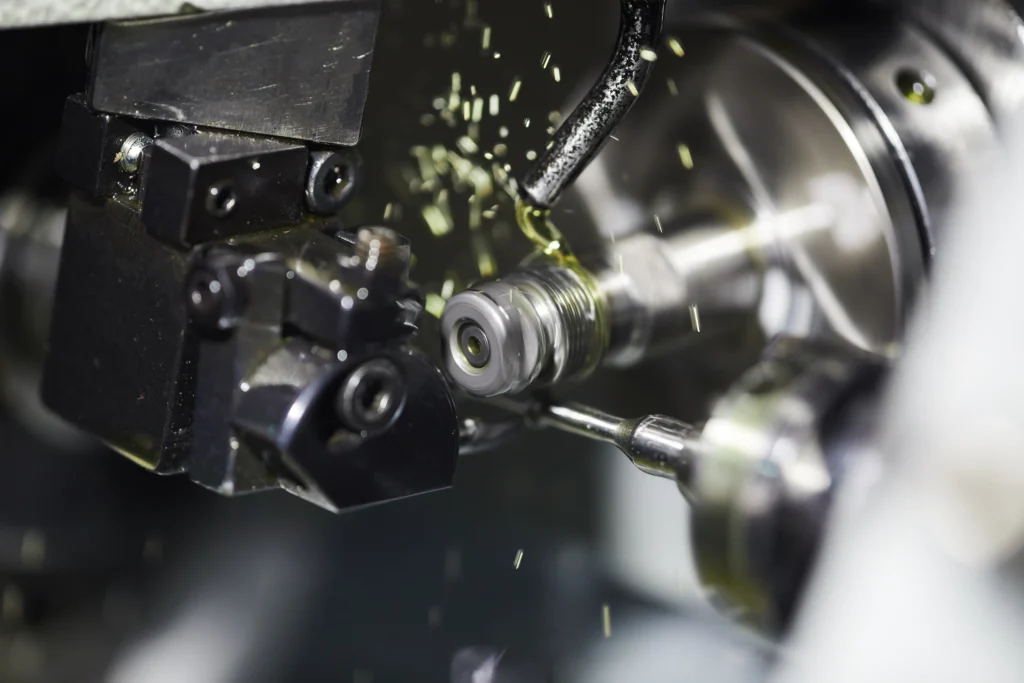
Cutting tools are selected according to the processing materials: Carbide ໂຮງສີທ້າຍ are used to process aluminum alloy, Coated Carbide or CBN (Cubic Boron Nitride) are used to process hardened steel. The tool is loaded into the ATC (ຕົວປ່ຽນເຄື່ອງມືອັດຕະໂນມັດ) and the tool length and diameter of each tool are recorded in the tool table of the machine tool. In five-axis machining, tool length compensation is particularly critical, because the tool often cuts into the workpiece at a non-vertical angle.
Workholding and fixturing
Fix the workpiece with a vise, fixture plate, or custom fixture. In five-axis machining, the clamping scheme must maintain a low-profile to prevent the spindle head or workbench from colliding with the fixture when the machine rotates to the limit angle. Zero-point clamping systems (such as Erowa, Lang and other brands) are widely used because they can greatly shorten the replacement time.
Set the workpiece coordinate system (WCS)
Use the probe or edge finder to determine the workpiece origin. On a five-axis machine tool, this step also needs to calibrate the table rotation center point (pivot point), commonly referred to as tool center point management parameters. The calibration error of rotation center point is the most common error source in five-axis machining, which must be strictly implemented.
Program loading and verification
The NC program generated by CAM is transmitted to the machine tool through USB, LAN or DNC (Direct Numerical Control). Dry run or air cut must be performed before cutting, the former means that the spindle does not rotate and the machine tool only performs the motion trajectory; the latter means that the spindle rotates but the tool runs on the outer trajectory of the workpiece or runs at a significantly reduced feed rate. This step is used to verify whether there is a collision risk between the tool, the spindle head, the fixture and the workbench.
ການກວດກາບົດຄວາມຄັ້ງທໍາອິດ
The first part is processed at a feed rate of 50% -75% of the set value of the program. After the machining is completed, the key feature sizes are measured using a calipers, a CMM (Coordinate Measuring Machine) or a scanning probe. Adjust the tool offset value or program parameters on demand, and then transfer to mass production after confirmation.
Batch production monitoring and post-processing
The batch production is carried out with all parameters after the verification of the program. Continuous monitoring of tool wear, chip evacuation and cutting fluid supply status. After the machining is completed, the parts usually need to go through post-processing processes such as deburring, cleaning and dimensional inspection. Process parameters are recorded and archived to ensure process repeatability.
Five-Axis CNC Machine Programming: CAM Software, RTCP and Post-processing Program
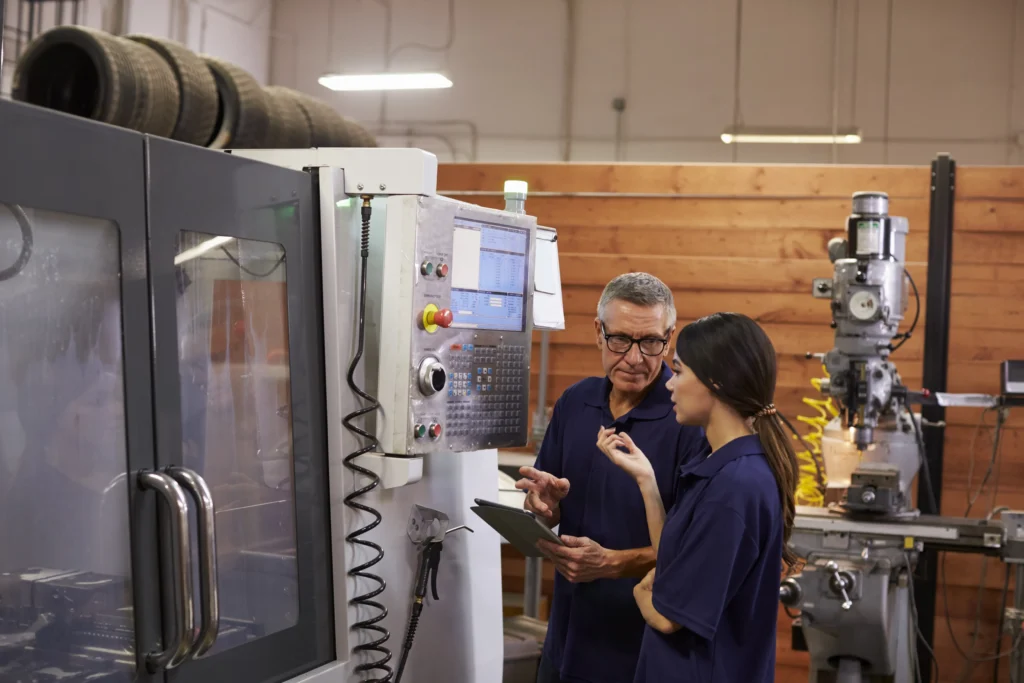
Almost all of the five-axis CNC programming is realized by computer-aided manufacturing software (CAM), rather than manually writing G-Code. The mainstream five-axis CAM software platform includes:
- Mastercam: industry standard software for workshops of all sizes; the five-axis strategy is perfect, covering swarf milling and multi-surface finishing.
- Siemens NX CAM: aerospace and automotive industry preferred; deep integration with NX CAD for high-end complex parts.
- Autodesk Fusion 360: low price threshold; suitable for prototype development and small and medium-sized workshop entry five-axis.
- Hypermill (Open Mind): high reputation in the field of five-axis surface finishing and mold processing.
The core concept of five-axis programming is RTCP (Rotational Tool Center Point), also known as TCPM in some control systems. Its function is to automatically compensate for the spatial offset of the tool tip position when the rotating shaft moves, ensuring that the tool center always moves along the programming path, regardless of the angle of the spindle head or the workbench. If the RTCP is not activated, the tool tip will deviate from the target surface when the rotation axis moves, resulting in machining errors.
After the tool path is generated, the general CAM output needs to be converted into G-code that conforms to the specific control system syntax specification through a post-processing program. Common control systems include Fanuc, Siemens 840D, Heidenhain iTNC and Mazatrol. Using the wrong post-processing program is a common cause of machine tool collision. It is important to ensure that the post-processing program is fully matched with the specific machine tool model.
More information about CNC programming and soft: ການຂຽນໂປຣແກຣມ ແລະ ຊອບແວເຄື່ອງກຶງ CNC: ເຄື່ອງມືທີ່ດີທີ່ສຸດສຳລັບປີ 2026
Five-Axis CNC machine Buyer’s Guide: How to Select the Right Machine
When evaluating the procurement plan of five-axis CNC machine tools, please focus on the following elements:
- Table size and load-bearing capacity: the working envelope of the machine tool should be matched to the largest typical workpiece.
- Spindle speed and taper (BT40, BT50, HSK-A63): high speed (18,000-30,000 RPM) suitable for aluminum alloy and composite materials; large taper interfaces provide greater rigidity in the processing of steel and titanium alloys.
- ລະບົບການຄວບຄຸມ: Fanuc and Siemens 840D dominate the global market; Heidenhain iTNC is more popular in European precision machining workshops; be sure to confirm that the CAM post-processing program supports the selected control system.
- Rapid traverse rate & acceleration: directly affects the cycle time in mass production.
- Collision avoidance software: built-in simulation systems for high-end machine tools from brands such as Mazak and JIANKE that automatically stop before a collision occurs.
- After-sales service and technical support coverage: need to consider the distance to the nearest service center and the average response time; the shutdown loss of five-axis machine tools is extremely high, and the service response speed is very important.
ROI and total cost of ownership
The return on investment (ROI) of five-axis machine tools mainly comes from the significant reduction of clamping time. For example, the same part needs to be clamped three times on a three-axis machine for 45 minutes each time (a total of 135 minutes), while only one clamping (30 minutes) is required on a five-axis machine. Based on the shop rate of $ 150/hour, each piece is saved by $ 262.50, which is a significant benefit in mass production. In addition, five-axis machining further improves the comprehensive investment return by improving surface quality (reducing manual finishing hours), improving machining accuracy (reducing scrap rate), and undertaking high value-added complex parts that cannot be produced by competitors.
ສະຫຼຸບ
Five-axis CNC machines are the most powerful and flexible production equipment in the field of modern precision manufacturing. Whether you are a senior machinist who is learning how to operate a CNC machine, a workshop manager who is evaluating the first five-axis investment, or an engineer who develops machining specifications for aerospace, medical, or automotive parts, a comprehensive understanding of the capabilities of five-axis machine tools, from configuration selection, programming methods to industry applications and return on investment, is an indispensable foundation.
In 2026, this technology is still evolving: AI-assisted toolpath optimization, In-process probing, and digital Twin simulation are gradually becoming standard configurations for mainstream models. The workshop that is now engaged in building five-axis capabilities and systematically developing application skills will occupy the most advantageous competitive position in the market of high value-added complex parts, which is the core value of advanced manufacturing.
FAQ
3-axis machines move only in X, Y, and Z — suitable for simple parts. The 4-axis adds one rotary axis (usually A or C) for cylindrical or multi-side work. The 5-axis adds a second rotary axis, enabling full simultaneous motion for highly complex shapes. Reddit machinists often note that 5-axis drastically reduces setups and improves accuracy for intricate parts that would otherwise require multiple fixtures on 3- or 4-axis machines.
The biggest benefits include fewer setups (one instead of five or more), superior surface finishes, shorter cycle times, reduced scrap, and the ability to machine complex geometries that are impossible on 3-axis machines. Shops report higher spindle uptime, lower labor costs, and better tool life because the tool can maintain optimal angles throughout the cut.
Aerospace, medical device manufacturing, automotive, defense, energy, and high-end mold & die industries rely heavily on them. They are perfect for turbine blades, impellers, orthopedic implants, and complex prototypes where precision and tight tolerances are critical.
Five-Axis machines excel with aluminum, titanium, stainless steel, Inconel, carbon fiber composites, plastics, wood, and high-performance alloys. The extra axes allow better tool engagement, making them especially effective for hard-to-machine metals and exotic materials.
Consider part size, material, required tolerances, budget, and whether you need simultaneous or 3+2 capability. Evaluate spindle speed, rigidity, control system (Fanuc, Siemens, Heidenhain), and after-sales support. Always match the machine to your highest-volume or most complex parts rather than buying the biggest or most expensive option.