Choosing the right CNC turning material is the most critical decision in the manufacturing process that directly determines the cost, production speed and the final performance of the components. Aluminum and steel have received more attention, while brass and copper are equally important in precision engineering due to their unique electrical and thermal properties that are difficult to be replaced by other alloys.
What are CNC Turning Materials?
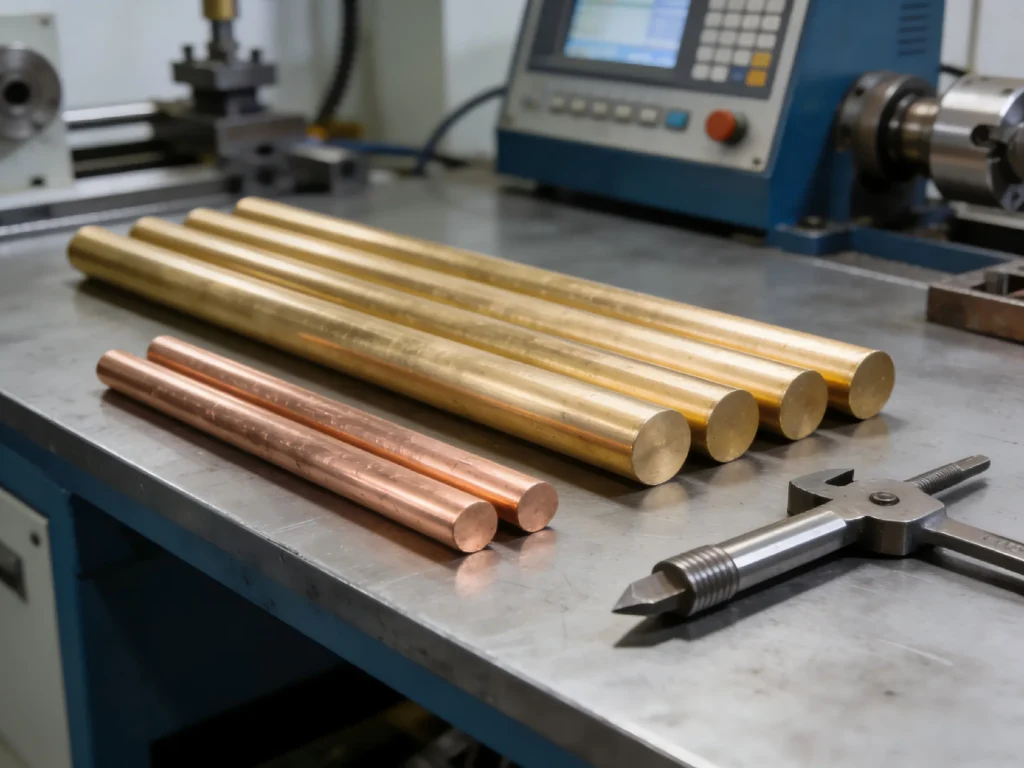
CNC turning materials refer to the raw materials (usually round bars or rods) that are fed into CNC lathes to manufacture cylindrical parts. In the CNC turning process, the material rotates while the stationary cutting tool removes the material to shape the component.
Although almost any rigid material can be turned, metal is the most common. The choice of material will affect the “machinability”, which is a measure of the difficulty of metal cutting. High machinability means shorter production time and lower cost.
Cost Efficiency: Harder materials will accelerate tool wear and increase management costs.
Parts Function: Electrical components need copper; low friction parts need brass.
Surface Finish: Some CNC turning materials are inherently able to produce smoother surfaces than other materials.
Why is Brass the Preferred Cutting Material in CNC Turning?
Brass is usually regarded as the gold standard for machinability when discussing CNC turning materials. But why is it so popular in CNC turning brass parts?
Excellent Machinability
Brass (especially C36000 alloy) is often used as a benchmark for machinability with a score of 100%. It produces finely chopped debris during processing, rather than long strips of spiral debris, which allows the CNC machine to run smoothly without clogging. This provides a very high cutting speed and feed rate that significantly reduces the cycle time.
Corrosion Resistance
Brass is naturally corrosion-resistant and is very suitable for pipe fittings, marine hardware and outdoor applications. It does not rust like steel that ensures a long life of the component.
Aesthetic Appeal
The bright and golden appearance of polished brass makes it the first choice for decorative hardware, knobs and building components.
Common Brass Alloys for CNC Turning
C36000 (Free-Cutting Brass): Contains lead, plays a lubricating role in the cutting process and is the most common alloy.
C26000 (Shell Brass): Higher ductility, more suitable for cold forming, but more difficult to process than C360.
Lead-Free Brass: In order to comply with environmental regulations, it is increasingly important (albeit slightly more difficult to process) in pipe assemblies.
JIANKE team notes: If your project requires high-volume production, choosing C36000 brass can reduce processing time by up to 20% (compared to low-carbon steel), thereby offsetting higher raw material costs.
When Should You Choose Copper Components in CNC Turning?
Although brass is an alloy of copper and zinc, pure copper is completely different. It is usually soft and “stick knife”, which makes processing more challenging. However, copper components are irreplaceable for specific applications.
Key Characteristics of Copper
Electrical Conductivity: Copper has the highest conductivity of all commercial metals (silver is higher but too expensive). This makes copper an essential material for electrical contacts, bus bars and wiring connectors.
Thermal Conductivity: Copper can dissipate heat quickly and is very suitable for heat exchangers and heat sinks.
Ductility: Copper has excellent ductility that allows bending and forming without breaking.
The Challenge of Processing Copper
Because copper is soft, it tends to be dragged and stuck to the cutting tool rather than cut cleanly. In order to process CNC turning materials such as pure copper effectively, mechanics must use sharp tools, specific cutting angles and a large amount of coolant.
Common Copper Grades
C10100 (Oxygen-Free Electronic): 99.99% pure copper, commonly used in high vacuum electronic equipment.
C11000 (Electrolytic Tough Pitch): The standard for electrical applications. It is slightly more difficult to process than C101 but has excellent electrical conductivity.
C14500 (Tellurium Copper): This is the “free-machining” version of copper. After adding tellurium, the machinability rating is improved to about 85% (compared with 20% for pure copper), and the conductivity is not significantly sacrificed.
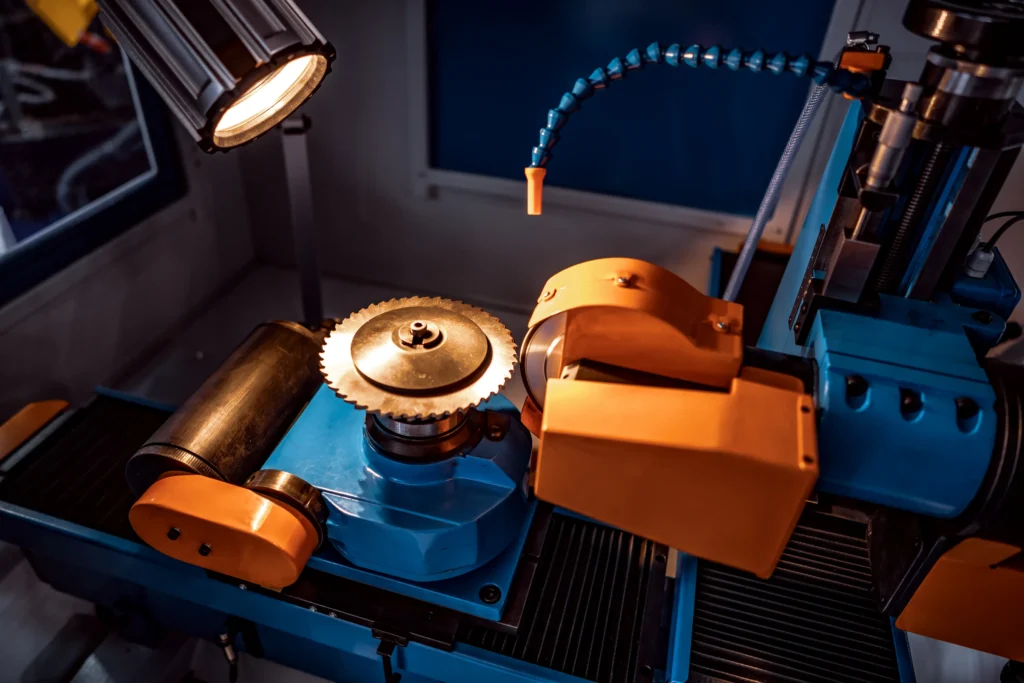
CNC Turning Material: Brass vs.Copper
| Comparison Table of CNC Turning Material: Brass vs.Copper | |||
|---|---|---|---|
| Feature | Brass (C36000) | Copper (C11000) | Tellurium Copper (C14500) |
| Machinability Rating | 100% (Excellent) | 20% (Poor) | 85% (Very Good) |
| Electrical Conductivity | ~26% IACS | 100% IACS | ~90% IACS |
| Cost of Material | Moderate | High | Very High |
| Corrosion Resistance | Good | Excellent (Patina forms) | Excellent |
| Primary Use | Fittings, Fasteners, Valves | Electrical Contacts, Heat Sinks | Electrical parts requiring complex machining |
Note: IACS represents the international standard for Annealed Copper.
How to Ensure Cost-Effective CNC Turning?
Since the price of copper and brass is usually higher than that of steel or aluminum, how can we reduce costs?
Optimize Design for Manufacturability (DFM)
Avoid using strict tolerances unless absolutely necessary. If the standard tolerance of +/ 0.005” is feasible, do not specify +/-0.001”. Tighter tolerances require slower processing speeds and more frequent inspections.
Select the Appropriate Alloy
If the standard C11000 can meet the requirements, do not use C10100 oxygen-free copper. Because the price difference between them is huge. Similarly, if conductivity is not the primary goal, use brass instead of copper.
Using Standard Bar Size
CNC turning materials have standard diameter specifications (e.g. 1/4”, 1/2”, 1”). These standard dimensions should be adapted when designing parts to minimize material removal. Turning 0.9” parts from 1.0” bars is efficient; turning 0.9” parts from 1.5” bars is a waste.
Considering Tool Life
Although the material cost of brass is higher than that of steel, the tool life for processing brass is much longer. This reduces the cost of replacing worn blades and milling cutters.
For engineers who need accurate technical data on tensile strength and thermal properties, it is essential to rely on a validated database.
The material properties database of thousands of metals and plastics can be queried by accessing MatWeb.
The Copper Development Association also provides extensive guidance on copper alloy standards and applications.
Frequently Asked Questions
The best material is usually copper telluride (C14500). It not only has conductivity close to pure copper (about 90% IACS), but also can be easily processed like brass, which solves the pain point that pure copper is difficult to turn.
Usually, brass is cheaper than copper. First, as a raw material, brass is an alloy of copper and zinc, and the price of zinc is much lower than that of copper ; secondly, brass has excellent machinability and fast processing speed, which can significantly reduce the labor and equipment time cost of machining.
No. Brass and copper are both non-ferrous metals (non-ferrous metals), which means that they are iron-free and non-magnetic. This makes them very suitable for electronic applications or medical device components that must avoid magnetic interference.
Although the raw material price of brass is usually higher than that of steel, it can be cut at a very high speed and feed rate. This greatly reduces the’ machine working hours’ – and in the CNC machining quotation, the machine running time is often the largest part of the cost. In addition, brass has less tool wear and saves the cost of tool replacement.
C36000 (free-cutting brass) contains about 2.5-3.7% lead, which is why it is extremely easy to process. It is completely safe and standard for most industrial accessories, fasteners and non-drinking water applications. However, if it is used for drinking water systems or specific medical equipment, lead-free brass or low-lead brass must be selected to comply with environmental regulations such as RoHS or California Proposition 65.
Conclusion
Choosing between CNC turning materials requires balancing performance requirements and budget constraints. Bronze offers unparalleled machinability and corrosion resistance and is the first choice for accessories and hardware. Copper is the undisputed preferred material in the field of electrical and thermal conductivity.
By understanding the characteristics of these alloys and taking into account the standard inventory size when designing parts, you can purchase high-quality and affordable components.
If you are looking for a reliable partner for your next project, please explore JIANKE.com to read more about CNC machines.