Learning and mastering CNC turning centers requires combining theory with practice. Beginners are advised to start by understanding simple programs and learning tool setting operations, gradually progressing to more advanced techniques.
What is a CNC Turning Center?
A CNC turning center is a highly automated turning machining equipment. In addition to traditional turning, it often also has milling, drilling and tapping functions. This equipment is suitable for mass production of rotating parts with complex structures and is capable of completing multiple machining operations in a single setup that improve production efficiency.
CNC Turning Center Fundamentals
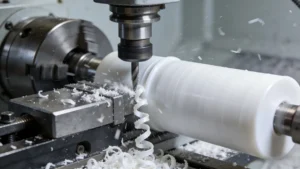
The core of a CNC turning center lies in its use of a CNC system to control the tool path, spindle speed, feed rate and depth of cut that achieve high-precision and high-efficiency machining. The workpiece is clamped and rotated during machining, while the tool moves along one or more linear axes.
Compared to traditional lathes, its features include:
Multi-axis capability-3-axis, 4-axis or even 5-axis allows for machining more complex geometries.
Turrets or automatic tool changers and a wide selection of tools make cutting operations more flexible.
They feature safety barriers, automatic chip removal and automatic feeding systems that make them suitable for modern production lines.
The basic workflow of CNC turning
Part drawing analysis: Understanding the drawing and clarifying machining requirements :dimensions, tolerances, geometric tolerances, surface roughness, etc.
Process planning: Determine machining steps.
What to do first, what to do next, selecting tools and determining cutting parameters such as spindle speed, feed rate and depth of cut.
- Program writing: Generating the machining program manually or automatically using CAM software.
- Program transfer: Transferring the program to the machine tool’s CNC system via USB flash drive, network or DNC.
- Workpiece clamping: Using clamps such as three-jaw chucks and spring collets to securely clamp the workpiece onto the spindle.
- Tool Preparation and Setting: Install the selected tools onto the turret.
- Tool Setting: Measure the tip position of each tool and input the data into the tool offset table of the CNC system. This is a crucial step to ensure machining accuracy.
- Program Verification and Trial Cut: Use the graphical simulation function to check if the toolpath is correct.
Perform a no-load run without a workpiece or using scrap.
- Perform a trial cut: measure the critical dimensions of the first workpiece and fine-tune the program or tool offset based on the results.
- Automatic Machining: After confirming that everything is correct, start the automatic cycle and the machine tool begins batch machining.
- Part Inspection: During and after machining, use calipers, micrometers, thread gauges and other measuring tools to inspect the parts.
Working Principle of a CNC Turning Center
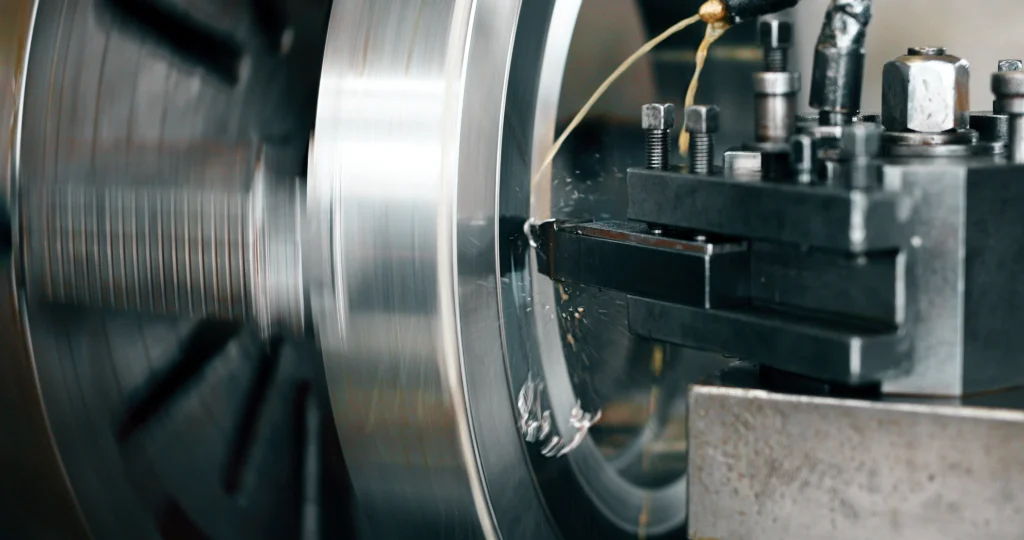
When a CNC turning starts,the workpiece is clamped and rotated and the tool feeds along one or more axes such as the X-axis/ Z-axis to cut the workpiece. In more advanced turning centers, there may also be C-axis (workpiece rotation positioning), Y-axis offset and simultaneous tool rotation (“live tool”), etc. A basic turning pattern emphasizing “rotating workpiece + moving tool”:

(Workflow Diagram of Rotating Workpiece and Moving Tool)
Basic operations Explanation in CNC turning centers
- Turning – The tool feeds parallel to the axis of rotation that subtract material from the workpiece’s outer diameter.
- Boring/Drilling – Cutting in machined or unmachined internal holes.
- Facing – The tool cuts on the workpiece’s end face perpendicular or at an angle to the axis of rotation.
- Threading or Grooving/Parting – Machining specific features on the workpiece along the axial or radial direction.
- Milling/Tapping – Expands the capabilities of traditional turning machines in models equipped with live tools, C-axis or Y-axis.
During operation you should pay attention to cutting parameters, tool material & coating, fixture positioning & stability, chip removal and coolant management.
Key Components of CNC Turning Centers
Machine Bed: Supports all components and provides rigid support.
Spindle/Headstock: Drives the workpiece rotation.
Turret or Tool Magazine/Tool Changer System: Stores and switches between multiple tools. Automatic Tool Changer (ATC) can significantly reduce tool change time.
Control System (CNC Controller): Reads programs such as G-code and controls tool movement, spindle speed and feed.
Drive and Axis System: X-axis, Z-axis and possibly Y-axis or C-axis.
Chip Removal and Cooling System: Ensures effective chip removal and stable cooling of the tool and workpiece.
Clamping/Chuck System: Fixes the workpiece that make ensure positioning accuracy and machining stability.
Types of CNC Turning Centers
Based on number of axes:
- 2 axis :X + Z axis
- 3 axis :X + Z + C axis
- 4 axis :plus Y-axis or auxiliary axes
- 5-axis: multiple turrets or tools machining simultaneously, etc.
Based on spindle direction: Horizontal and Vertical turning centers.
Horizontal centers are more common and suitable for general rotating parts. Vertical centers are suitable for large and heavy workpieces.
Based on function: Single-spindle and dual-spindle that allows workpiece transfer/machining between the main and auxiliary spindles.
CNC Turning Tools

Tool material, coating and geometry must match the material being machined and the cutting conditions.
Common tool materials include tungsten carbide (hard alloy), ceramic and coated tools. The tool geometry and tool holder/clamp system should also match the machine tool and workpiece.
Pay attention to tool wear, tool changing strategies and cutting parameter optimization. Because these all affect tool life and machining consistency.
- External turning tools: Turning external diameters and end faces.
- Internal boring tools: Boring internal holes.
- Parting/grooving tools: Parting off workpieces or turning grooves.
- Threading tools: Turning internal and external threads.
- Drills/taps: Drilling and tapping.
Modern CNC lathes use indexable inserts; when the inserts wear out, you simply replace them with standard inserts without grinding.
Materials Applicable to CNC Turning
CNC turning centers can machine a wide range of materials from traditional metals to plastics and composite materials. Common materials include:
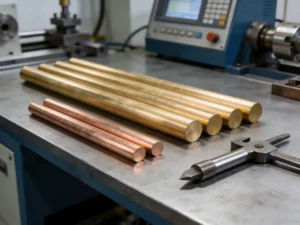
- Metals: carbon steel, alloy steel, stainless steel, aluminum alloys, copper alloys, titanium alloys, etc.
- Non-metals: hard plastics, engineering plastics and certain composite materials.
However machining strategies must be adjusted based on the material’s machinability -hardness, toughness, thermal conductivity and deformation tendency.
Common Errors of CNC Turning
Identifying and optimizing these problems is key to maximizing equipment performance.
- Improper clamping leads to vibration and poor machining accuracy.
- Inappropriate tool selection or parameter settings cause premature tool wear or breakage.
- Poor chip removal or insufficient cooling causes re-chipping/surface damage.
- Multiple clamping operations result in accumulated positioning errors.
- Ignoring machine tool stability or exceeding its capabilities affects machining quality.
Safety Operating Procedures
- Dressing Requirements: Wear work clothes, safety glasses and tuck long hair into a cap. Gloves are strictly prohibited when operating the machine.
- Pre-start Inspection: Check that the fixtures and tools are clamped securely and that the workpiece is correctly mounted.
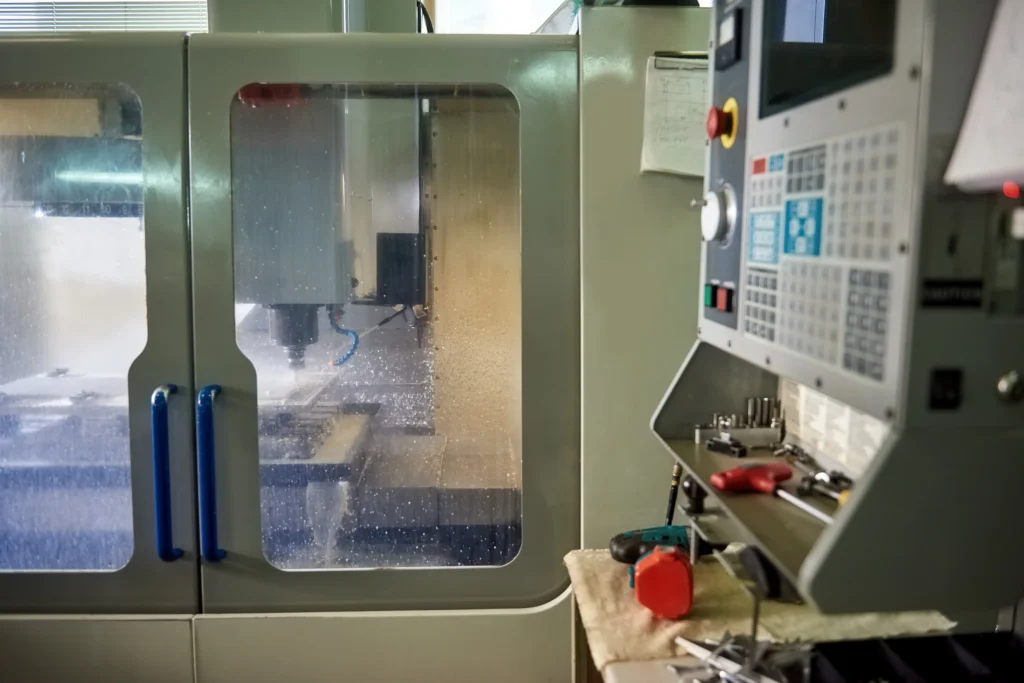
- Closed Door During Machining: Always close the safety door during machining.
- No Touching: While the machine is running, no part of the body may enter the machining area. Touching the rotating spindle or workpiece is strictly prohibited.
- Measurement Pause: The machine must be stopped before measuring the workpiece or clearing chips.
- Emergency Stop Button: Familiarize yourself with the location of the emergency stop button and press it immediately in an emergency.
How to Fully Utilize the Performance of a CNC Turning Center?
- Accurately select the machine tool type (about number of axes, functions and spindle direction) to match the workpiece requirements.
- Optimize tool combinations and cutting parameters to complete multiple operations in a single setup whenever possible.
- Improve automation levels such as automatic tool changers, automatic loading & unloading and monitoring systems.
- Strengthen fixture design and workpiece positioning to improve rigidity and repeatability.
- Pay attention to cutting chamber cooling, chip removal design and tool life management.
- Regularly maintain the machine tool, calibrate guideways and spindles to ensure long-term stable operation.
Advantages of CNC Turning
- Higher machining efficiency and reduce manual intervention.
- Better machining accuracy and repeatability.
- More operations can be completed in a single setup that reduce waste and errors.
- Higher level of automation that suitable for modern production lines.
- Adaptable to diverse part machining needs from simple to complex.
Further Reading
If you wish to explore related content further, please refer to the following recommended articles: