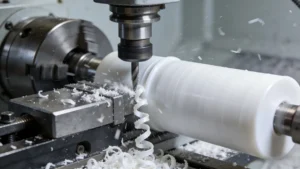
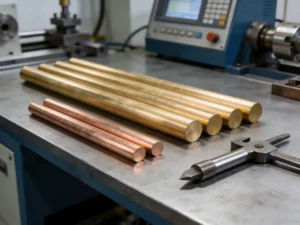
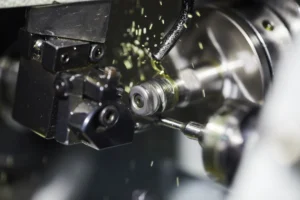
Small mechanical parts are ubiquitous in applications across the electronics, medical, automotive, and aerospace industries. From infusion pumps and electrical probes to internal micro-components in surgical implants, these parts are now lighter, more compact and more efficient thanks to the precision turning processes performed by CNC Swiss lathe.
CNC Swiss lathe offers a significant advantage over traditional CNC Lathe machines in the precision machining of small parts with micron-level features. With the latest advancements in materials science and motion control technology, CNC Swiss lathe has become the industry standard for machining cost-effective micro-parts with extremely high precision and repeatability.
5 Key Differences Explained
| Feature | CNC Swiss Lathe | Regular CNC Lathe |
| Does it have a guide bushing? | Yes | No |
| Material Movement | Material moves through guide bushing | Material fixed in chuck |
| Precision | Extremely high (often ±0.0001″) | Good, but less precise on long parts |
| Ideal Part Length | Long, slender parts | Shorter, larger diameter parts |
| Multiple Operations | Simultaneous front and back machining | Generally sequential operations |
| Production Speed | Very high for small parts | Moderate |
| Typical Applications | Medical devices, watchmaking, electronics | General machining, larger components |
| Setup Complexity | More complex | Less complex |
| Programming | More sophisticated | Simpler |
Core Component
The presence or absence of a guide bushing is the most fundamental difference that determines all other characteristics.
CNC Swiss lathe: Equipped with a guide bushing. This is a high-precision and openable tungsten carbide sleeve that tightly wraps around the bar stock and very close to the cutting point. It provides extremely close support for slender bars that fundamentally solve the problems of workpiece bending and vibration.
Traditional CNC lathe: Without a guide bushing. The workpiece is clamped at one end by a chuck with the other end suspended (cantilever beam structure). During machining especially slender pieces cutting forces easily cause bending and vibration in the workpiece.
Toolpath
Who moves? The toolpath motion of the CNC Swiss lathe and traditional CNC lathe to achieve the function of the guide bushing is completely different.
CNC Swiss lathe: The spindle moves the workpiece along the Z-axis. During rotation, the workpiece reciprocates precisely along the Z-axis via the guide sleeve and is then fed to the fixed tool for cutting.
Traditional CNC lathe: The turret moves along the Z-axis. The workpiece rotates in the chuck and the cutting tool is mounted on the movable turret, which moves to approach the workpiece to complete the cutting.
Structural Layout
What are the tool posts and sub-spindle like? To achieve efficient machining, the internal structures of the two types of lathes differ significantly.
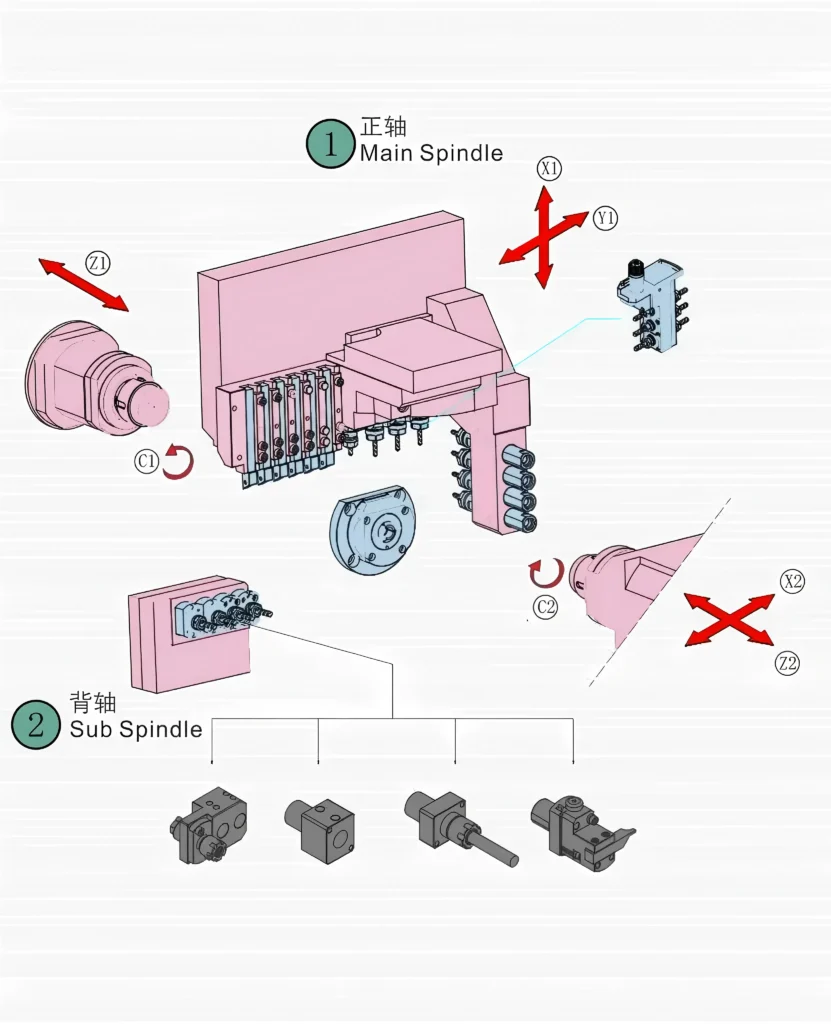
CNC Swiss lathe: Adopt a multi-position powered tool post layout surrounding the spindle. These tool posts can work simultaneously or sequentially and are equipped with a sub-spindle. After the main spindle completes machining at one end of the workpiece, the sub-spindle takes over and immediately begins machining at the other end that finishes all operations in a single setup.
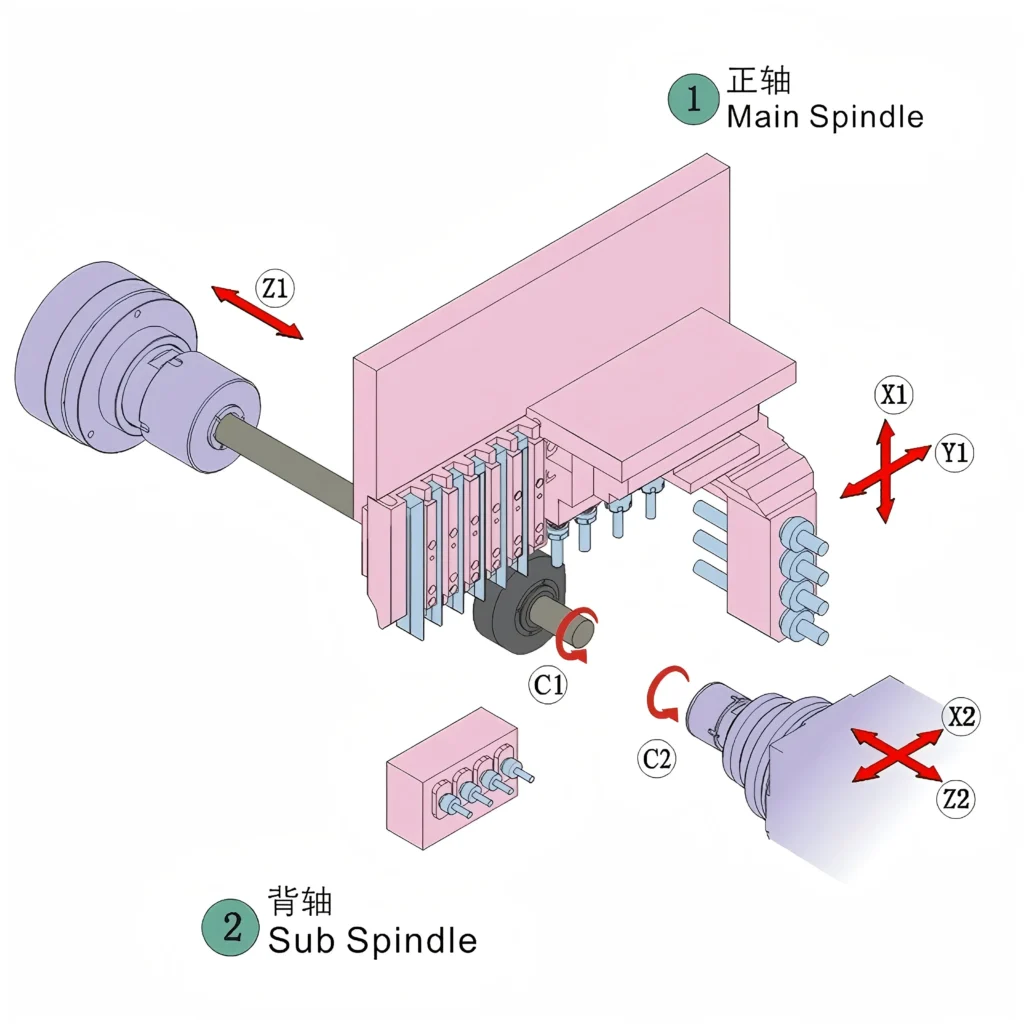
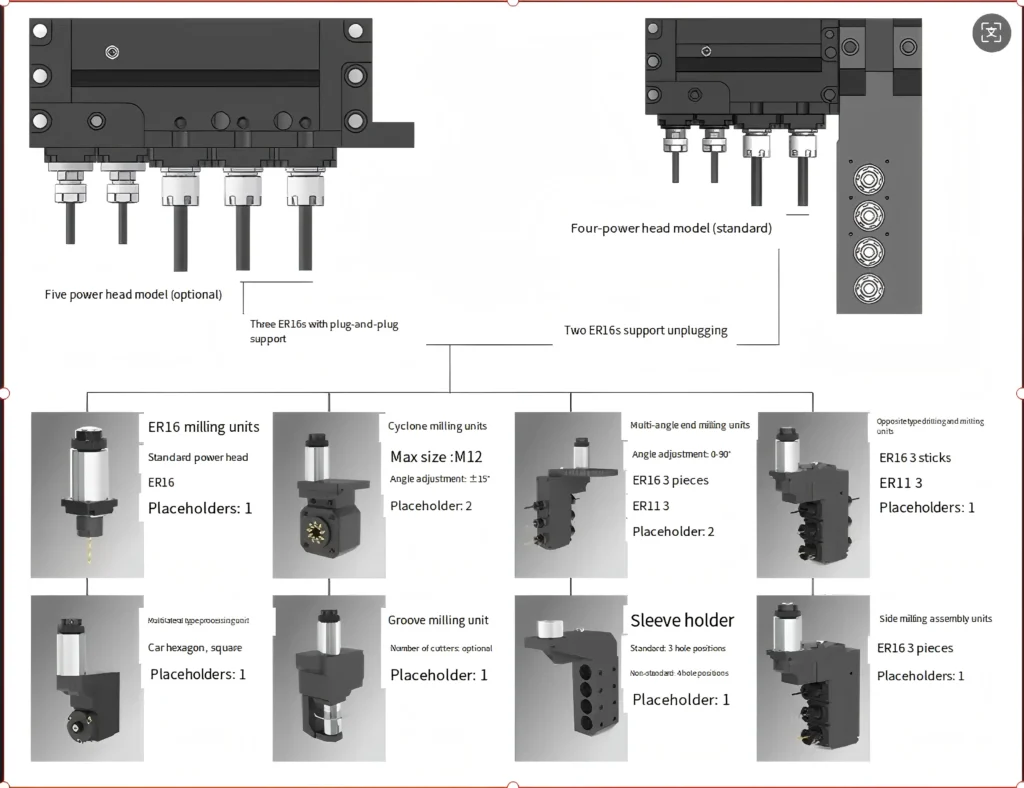
Traditional CNC lathe: use a turret with a relatively limited number of tools and usually only one tool works at a time. The sub-spindle is an optional configuration and many economical models do not have this function.
Machining Capabilities
CNC Swiss lathe:Extremely adept at machining small and ultra-precision parts with high length-to-diameter ratios. It achieves micron-level tolerances and excellent surface finish due to the guide bushing, which make it a typical milling-turning solution.
Traditional CNC lathe: More suitable for machining short, thick, disc-shaped and flange-shaped parts with good rigidity. For slender parts, although a follow post can be used, the accuracy, surface finish and efficiency cannot compare with CNC Swiss lathe.
Efficiency and Cost
Process concentration affects production efficiency and initial investment.
CNC Swiss lathe: Extremely high process concentration. The multi-tool position + sub-spindle design allows it to complete almost all processes in a single setup that greatly reduces production cycle time and secondary clamping errors. However, the initial investment and programming complexity are higher.
Traditional CNC lathe: Relatively low process concentration. Machining complex parts often requires multiple setups or movement between multiple machines that result in lower overall efficiency. However, their initial cost is lower and setup and programming are simpler.
Future Trends and Industry Insights
The development of CNC Swiss lathe continues to accelerate. Its future development trends closely revolve around the core directions of intelligence, integration, optimization and greening:
Intelligence and Digitalization (Industry 4.0)
This is the most crucial and far-reaching development direction. Future CNC Swiss lathe will no longer be isolated machining units, but nodes in a smart factory network.
IoT and Data Acquisition: CNC Swiss lathe will be equipped with numerous sensors to monitor spindle load, temperature, vibration, tool wear and other data in real time. This data will be uploaded to the cloud or local servers for analysis.
Predictive Maintenance: By analyzing historical and real-time data, the system can predict the failure time of spindle bearings, guideways, or tools, thereby scheduling maintenance before failures occur and greatly reducing unexpected downtime.
Adaptive Machining: CNC Swiss lathe can automatically adjust feed rates and spindle speeds based on real-time collected cutting forces, vibrations and other signals to optimize the machining process, protect tools and ensure consistent machining quality.
Digital Twin: Creating a digital model in virtual space that perfectly corresponds to the physical machine tool. Before machining, simulation and program verification can be performed on a digital twin to ensure zero collisions and optimal processes. During machining, real-time data is synchronized with the digital twin that achieves transparent management throughout the entire process.
Ultimate Efficiency and Versatility
CNC Swiss lathe is becoming increasingly versatile to further reduce the number of setups and shorten delivery cycles.
Enhanced B-axis Functionality: In addition to the traditional X, Y and Z axes, the B-axis (rotation around the Y-axis) functionality has been greatly enhanced. Combined with a powered tool holder, complex inclined and curved surface machining can be achieved that truly realizes “one setup, all processes completed.”
Multi-spindle and Multi-channel Technology: Multi-spindle machine tools can process multiple parts simultaneously, multiplying production efficiency. Multi-channel CNC systems allow different tools to perform different operations simultaneously (e.g., one channel turning the outer diameter, another drilling) that optimize machining cycle time.
Integrated Secondary Machining: Milling, drilling, tapping, deep hole drilling, knurling, laser marking and even 3D printing functions are integrated into a single CNC Swiss lathe. After turning, the workpiece is immediately processed on the same machine to avoid errors and efficiency losses caused by multiple clamping operations.
Pursuing Higher Precision and Smaller Dimensions
With the increasing demand for miniaturized products (such as wearable devices and micro-medical devices), the precision requirements have reached the micrometer or even sub-micrometer level.
Linear Motor Drive: Compared with traditional ball screws, linear motors have higher speed, acceleration and positioning accuracy. Therefore, they are the ideal choice for high-frequency, high-precision reciprocating motion.
Thermal Stability and Vibration Control: CNC Swiss lathe manufacturers use materials with low thermal expansion coefficients , integrated cooling systems (for constant-temperature cooling of the spindle, lead screw, motor, and even linear guides). And they adopt active vibration damping technology to combat the effects of thermal deformation and vibration on precision.
Miniaturized Machining Capabilities: CNC Swiss lathe specifically optimized for micro-parts with diameters less than 1mm are equipped with ultra-small chucks and cutting tools to meet the extreme demands of industries such as watchmaking and medical catheters.
Automation and “Unmanned” Production
Rising labor costs and the demand for 24-hour continuous production are driving the development of CNC Swiss lathe towards full automation.
Robot Integration: Robot loading and unloading have become standard functions. The future trend is that robots will be required to handle loading and unloading work, as well as perform tasks such as raw material preparation, sorting after in-machine inspection and even simple assembly.
Automatic Tool Setting and In-Machine Measurement: CNC Swiss lathe are equipped with laser tool setters and contact probes, enabling automatic measurement and compensation of tool length and wear. At the same time, the probes can perform in-machine measurements of the workpiece during or after machining that ensure quality and achieve closed-loop control.
Seamless Integration of Bar Stock Feeders with Automation Systems: Bar stock feeders, workpiece receivers and subsequent conveyors and AGVs (Automated Guided Vehicles) are seamlessly integrated to form a complete automated production unit.
Sustainability and Green Manufacturing
Environmental protection and energy conservation are now a global consensus in manufacturing.
Energy Efficiency: The new CNC Swiss lathes utilize more efficient servo motors and drive systems that automatically reduce energy consumption during standby or idle operation.
Reduced Coolant Usage: Promoting the use of micro-lubrication and minimum quantity lubrication technologies and even dry cutting, significantly reduces the use of cutting fluid and subsequent treatment costs that create a cleaner and safer working environment.
Tool and Material Optimization: Optimizing cutting parameters through intelligent software reduces idle travel and allows for the selection of more environmentally friendly coatings and tool materials that improve resource utilization from the source.
CNC Swiss lathes allow for the machining of complex designs using drilling, turning, milling, knurling and other unique processes on a single machine. The components machined by CNC Swiss lathes are typically used in the electronics industry, medical devices and implants, watch parts and components such as micro-shaft connectors and contacts. These are often small, long and complex mechanical parts.
JIANKE MACHINERY offers the highest quality CNC Swiss lathes. We work closely with our customers to provide them with optimal solutions for industries such as aerospace, military and medical.