In the precision manufacturing industry, CNC Swiss lathe and conventional CNC lathe are common machining equipment. While both can achieve automated cutting, they differ significantly in structural design, machining methods and applicable workpieces. Understanding these differences helps you choose machining services that better suit your products and cost structure.
Five common types of CNC machines?
- CNC Lathes
- CNC Swiss Lathe
- CNC Milling Machines
- CNC Machining Centers
- Mill-Turn Turning Centers
CNC Swiss lathe and conventional CNC lathe are mainly used for turning operations, but their structures and application focuses differ.
What is a CNC Swiss Lathe?
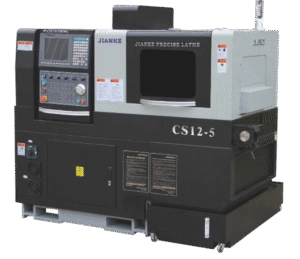

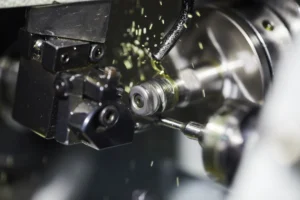
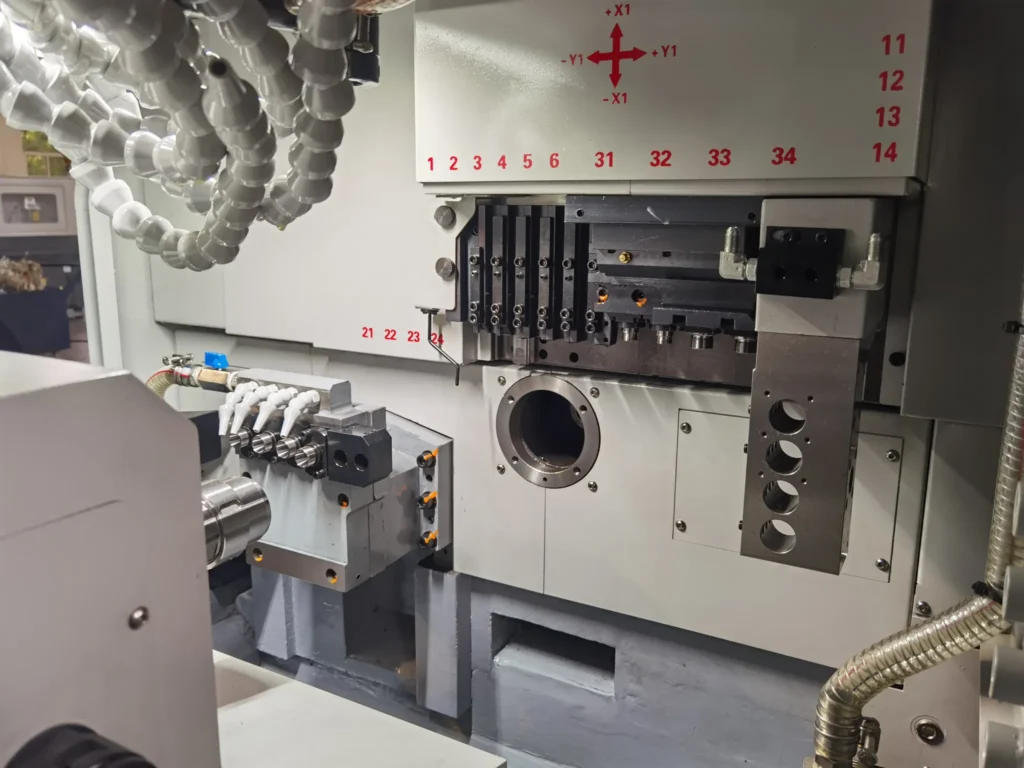
A Swiss Computer Numerical Control (CNC) machine tool also known as a CNC Swiss Lathe is a special type of CNC machine tool capable of manufacturing extremely small parts with superior efficiency, precision and accuracy. At JIANKE MERCHINERY, our CNC Swiss lathe can machine complex and slender shaft parts with diameters less than 12mm.
It features:
Suitable for small-diameter parts with high length-to-diameter ratios.
Capable of performing multiple machining operations in one pass.
High machining accuracy and good dimensional consistency.
Commonly used in medical devices, electronic connectors, instrument parts, etc.
What is a Traditional CNC Lathe?

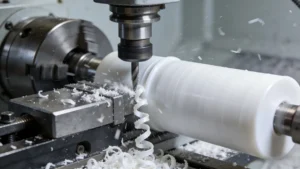
Traditional CNC Lathe uses automated computer programs and commands to control cutting tools, shaping material into the desired form. This computer-controlled operation improves efficiency, accuracy and precision compared to manual machining methods. CNC Lathe can cut, drill and carve various materials such as wood, plastic and metal to manufacture high-quality custom parts and products.
It has a wider machining range that is suitable for the general machining needs of medium to large structural components.
It features:
Wide range of part sizes
Mature structure and relatively simple operation
Relatively low cost
Commonly used for machining mechanical parts, flanges, shafts, etc.
Design and Machining Performance Comparison
| Factor | CNC Swiss lathe | Traditional CNC lathe |
| Workpiece support | Guide bushing support with high stability | Held by a chuck and is prone to vibration when the suspension is long |
| Processing method | Workpiece movement and tool fixation | Tool movement and workpiece fixation |
| Processing efficiency | Multiple blades can be operated simultaneously, improving efficiency | Processing sequentially and moderate efficiency. |
| Machining accuracy | Better smoothness and consistency | Accuracy depends on rigidity and process settings |
Material Properties and Workpiece Suitability
CNC Swiss lathes are suitable for small and high-precision parts.And its materials generally are :
- Stainless steel
- Titanium alloys
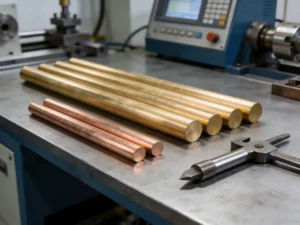
- Copper alloys
- Aluminum alloys
Traditional CNC lathes are suitable for larger or medium-sized parts. Its materials generally are :
- Carbon steel
- Cast iron
- Alloy steel
Material Properties and Workpiece Suitability
CNC Swiss lathes are suitable for small and high-precision parts.And its materials generally are :
- Stainless steel
- Titanium alloys
- Copper alloys
- Aluminum alloys
Traditional CNC lathes are suitable for larger or medium-sized parts. Its materials generally are :
- Carbon steel
- Cast iron
- Alloy steel
Cost Analysis and Maintenance
The more precise the part and the larger the batch size, the more cost-effective the CNC Swiss lathe is; the larger the part or the more unstable the batch size, the more economical the traditional CNC lathe is.
| Factor | CNC Swiss lathe | Traditional CNC lathe |
| Equipment costs | Higher | Medium |
| Tool consumption | Higher | Medium |
| Operational skill requirements | Higher | Universally trainable |
| Single-piece processing cost | The cost can be reduced when producing large batches. | Lower cost when producing small batches |
Applications
The core advantage of CNC Swiss lathes lies in their guide bushings and multi-axis/sub-spindle design. Key application areas include:
Medical Devices
Typical parts: bone screws, surgical instrument shafts, dental implants, endoscope components, pacemaker components, minimally invasive surgical instruments.
These parts are small and complex, made of expensive materials such as titanium alloys and require extremely high biocompatibility and surface finish. CNC Swiss lathes perfectly combine one-time setup and ultra-high precision.
Aerospace
Typical parts: engine probes, fuel nozzles, fasteners, sensor housings, small shafts in flight control systems.
These parts often use difficult-to-machine materials such as high-temperature alloys and have extremely stringent tolerances. The rigidity and stability of CNC Swiss lathes can handle these materials and ensure reliability.
Electronics and Communications
Typical parts: fiber optic connector ferrules, semiconductor components, miniature connectors, threaded shafts, lead screws.
These parts require extreme dimensional accuracy and surface finish to ensure stable signal transmission.
Precision Instruments and Watches
Typical parts: Watch gear shafts, instrument pointers, encoder shafts, optical device adjusting screws.
This is the traditional domain of CNC Swiss lathes that are specifically designed for the miniature precision machining of the watchmaking industry.
All of the above parts are characterized by small diameter, complex structure, large length-to-diameter ratio and strict tolerance requirements. All machining operations need to be completed in a single setup.
Traditional CNC lathes (such as vertical or horizontal lathes) have become the absolute mainstay of manufacturing due to their high rigidity, simple structure and wide applicability. Their main application areas include:
Automotive Industry
Typical parts: Wheel hubs, brake discs, gearbox gear blanks, steering knuckles, engine camshafts, various flanges and joints.
These parts are mostly disc-shaped or short shaft-shaped with good rigidity and are produced in large batches. The power and torque of traditional CNC lathes are sufficient to efficiently remove large amounts of metal.
General Machinery and Heavy Industry
Typical parts: Pump housings, valve bodies, bearing housings, drive shafts, rollers, large flanges.
These parts range in size from tens of millimeters to several meters. Traditional CNC lathes (especially large vertical lathes) are the basic equipment for machining them.
Energy Industry
Typical parts: turbine blade roots, wind turbine bearings, oil and gas valves, pipe fittings.
These parts typically require heavy-duty cutting that demand high power and rigidity from the machine tool, while the absolute precision requirements may be slightly lower than in the aerospace industry.
Mold Industry
Typical parts: mold blanks, cavities, electrodes.
These require large-mass turning and have high surface finish requirements, but their shapes are relatively simple.
How to Choose?
Choose a CNC Swiss lathe when your parts have one or more of the following features:
- Long and slender shafts with a length-to-diameter ratio exceeding 4:1.
- Miniature parts with a diameter less than 32mm.
- Tolerance requirements within ±0.005mm or even tighter.
- Complex structures that require multiple processes such as turning, milling, drilling, tapping and grooving to be completed on a single machine.
- Expensive or difficult-to-machine materials necessitate minimizing scrap rates.
Conventional CNC lathes are often chosen when your parts have the following characteristics:
- Discs, flanges, short, thick shafts.
- The parts have sufficient rigidity that eliminate the risk of bending vibration.
- The machining tasks are diverse that require a versatile machine tool.
- The budget is relatively limited and the precision requirements of the parts are within the standard range.
A modern precision manufacturing plant typically operates with both conventional CNC lathes for most common parts and CNC Swiss lathes for the most precise and complex components.
CNC Swiss Lathe Machine from JIANKE MERCHINERY
For reliable CNC Swiss lathe machines, centerless grinding, finishing and other services, work with JIANKE MACHINERY. As a manufacturer with over 80 patented technologies, we have the resources and expertise to provide our customers with top-quality precision-machined parts tailored to their industries.

Today to learn more about our custom capabilities or to get started on your next project.