Since its inception in the 1860s, the automobile industry has been developing on the basis of innovation and technology. Many of the biggest innovations in the automotive industry are directly related to the advancement of manufacturing technology. The numerical control machining of automobile applications has promoted many manufacturing advances in the industry.
In recent years, advances have been made in design, robotics and manufacturing processes. All of these have promoted a significant improvement in the automation of automobile processing. These technologies have also brought improvements in vehicle design and performance. CNC machining has a variety of applications. However, this technology has played a number of important roles in the transformation of automobile manufacturing.
Advantages of CNC Machining for Automotive Applications
CNC machining has become an important part of the automobile industry, bringing a number of significant advantages and improving the manufacturing process.
The benefits of CNC include increased production speed and higher precision, which have greatly improved the efficiency and product quality of the industry.
Speed
One of the biggest advantages of CNC machining of automobile parts compared to traditional processing is speed, especially in low-yield production, delivery time is particularly short. Since the processing is automatically completed by the computer, there is no need to consider manual limitations such as fatigue.
The speed advantage of CNC is particularly evident when mass production of parts, because computer instructions can be repeated multiple times.
However, traditional processing may be faster in some cases, such as when only a single object is produced. In this case, the time required to make computer instructions may exceed the time required to manually process a single part.
Precision and Accuracy
Another reason why automobile manufacturers prefer CNC machining is the accuracy and high precision of the process. The digitization and autonomy of the process are almost error-free, and the most sophisticated CNC setup provides a machining tolerance of ± 0.001 inches.
Understandingly, the automotive industry often requires such fine tolerances because the failure of the engine or other key components can have serious consequences for the end user.
Precision CNC machining of automotive parts is often a necessary condition for the production of end-use metal parts, although prototype CNC parts can use looser tolerances.
Repeatability
Because the same CNC machining operation can be repeated many times without producing differences between parts, this technology is particularly useful when manufacturers need to produce a single component in large quantities. In an industry that produces and sells 81.5 million vehicles annually, the demand for mass production is commonplace.
Fortunately, CNC machining is more cost-effective when dealing with large quantities, because the actual processing of the product is more labor-saving than the previous period ( including digital design of components, preparation of G code and selection of materials ).
Flexibility
Known for its flexibility, CNC machining enables car manufacturers to quickly adjust their production processes to meet design changes or new requirements. This adaptability is critical to maintaining competitiveness in a rapidly changing market, because consumer preferences and technological advances may change rapidly.
Through CNC machinery, you can seamlessly switch between different production environments without long downtime that enhance the ability to respond efficiently to industry trends and changes.
Support Various Materials
A key advantage of CNC machining in the automotive field is that it can handle a variety of materials. From metals such as aluminum alloy and steel, to plastics and composite materials, CNC machine tools process various substances needed to manufacture different automotive parts.
Versatility is crucial for the production of products ranging from durable engine parts to lightweight body panels and each material requires different properties to ensure functionality and performance.
Customization
CNC machining is good at producing customized parts with high precision, which is particularly beneficial to the automotive industry. Whether customizing parts for high-performance vehicles or modifying parts for special editions, CNC technology allows modification without expensive and time-consuming mold replacement.
This capability not only supports innovation in automotive design, but also helps manufacturers meet specific customer needs more effectively.
Automation
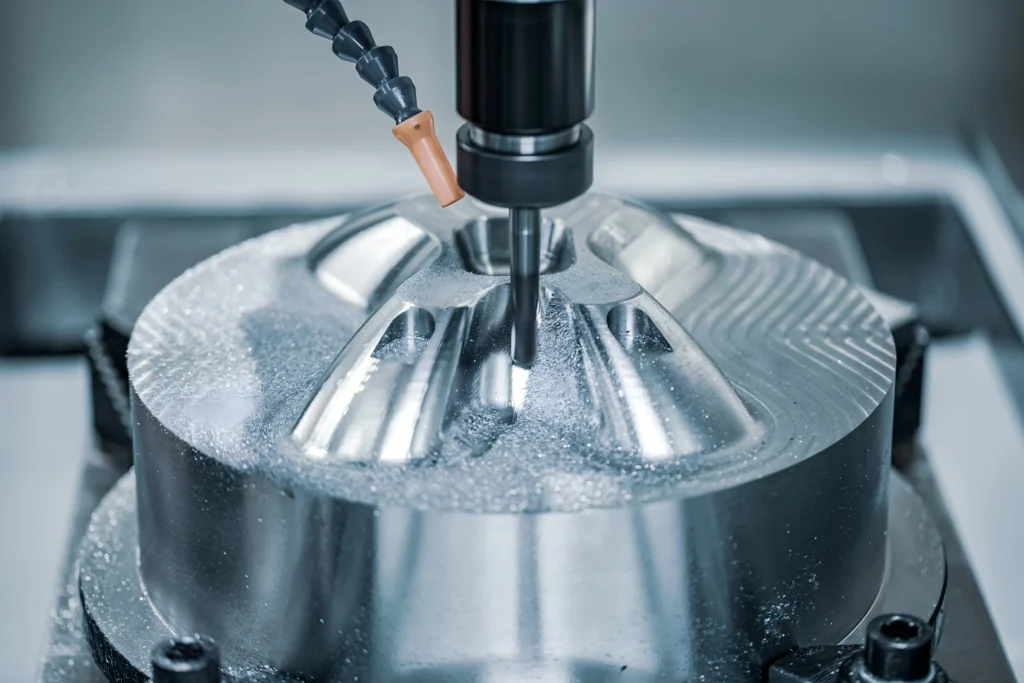
Automation is the core of CNC machining, which brings significant advantages in production efficiency and labor cost. Once programmed, CNC machine tools can run autonomously that reduce the need for manual intervention and minimizing the risk of human error.
This high degree of automation ensures that parts are produced with consistent quality and precision, which is critical for the automotive industry, as safety and reliability are essential.
Consistency
The repeatability of numerical control machining ensures that each part is the same as the previous part, which is very important for maintaining the integrity of the vehicle mechanical system. The consistency of parts production helps to ensure that vehicles meet the stringent safety and performance standards set by manufacturers and regulators.
By using numerical control technology, automobile manufacturers can rely on the perfect fit of each part, shorten the assembly time and improve the overall reliability of the final product.
Prototyping Applications of CNC Machining for Automotive industry
Numerical control machining is helpful in the prototype design and production application of the automobile industry. In the latter category, the process is conducive to the production of high-quality, fully functional prototypes. The prototype will then be tested and verified before entering the production stage.
Due to the wide variety of materials compatible with CNC machining, this process is suitable for many vehicle parts. It is very suitable for metal or plastic parts under the hood of the engine. You can also use automotive CNC machining to show the design features of automotive interiors.
For example, using CNC machining and transparent acrylic materials, rapid prototyping lighting components are very easy. In the development of new models, CNC machining can also quickly produce high-quality functional prototypes for performance testing.
Production Applications of CNC Machining for Automotive industry
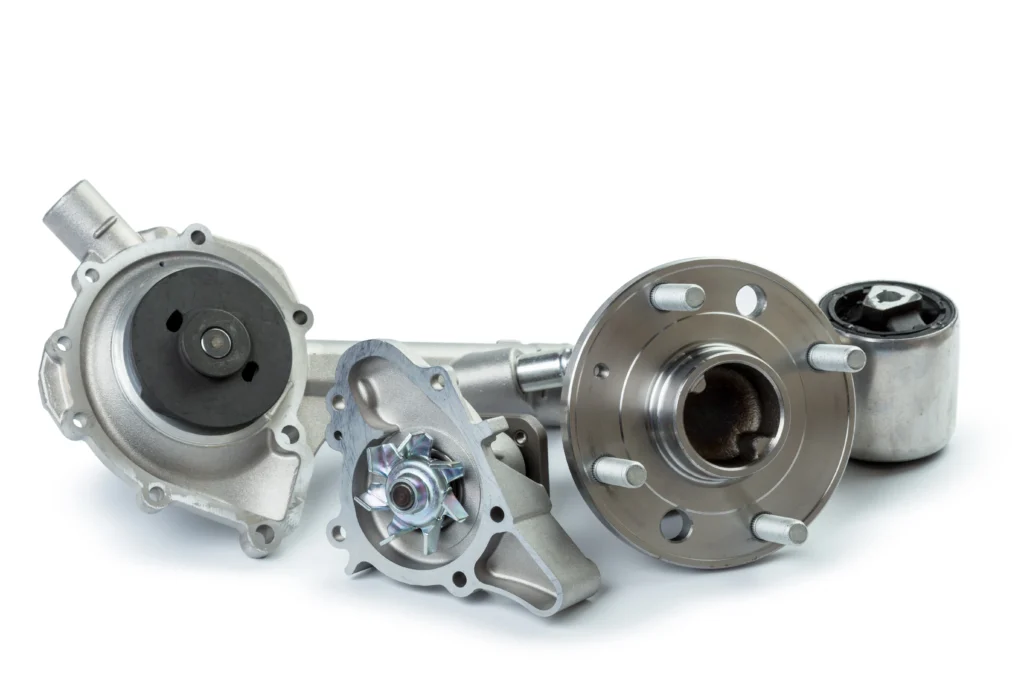
In addition to many prototype applications, automotive processing also assists in the production of many CNC automotive parts. Including :
Internal Panel
The internal parts of the car such as the instrument panel can be manufactured by CNC machining. The process has the accuracy required to process the instrument panel frame from the original plastic block. This helps to ensure that the openings of the speedometer, fuel gauge and indicator light are completely aligned during installation.
Starting Motor
Automotive manufacturers continue to look for applications for CNC machining of metals. For example, complex parts such as starter motors can be manufactured by CNC machining. The precision and complexity of the process enable these components to be optimized. Manufacturers can also easily improve them in terms of performance, durability and reliability.
Cylinder Head
In the automotive and racing sports industry, CNC machining has also brought a number of advantages. These advantages are reflected in the engine block and cylinder head that cover the cylinder in the internal combustion engine.
This technology is particularly useful for limited operation or custom engine models. These parts come from a solid aluminum block, which is an easy-to-machine metal. Other power transmission components, such as generator housings, brake system valves and fuel pump systems, can also be manufactured by CNC machining.
Gearbox
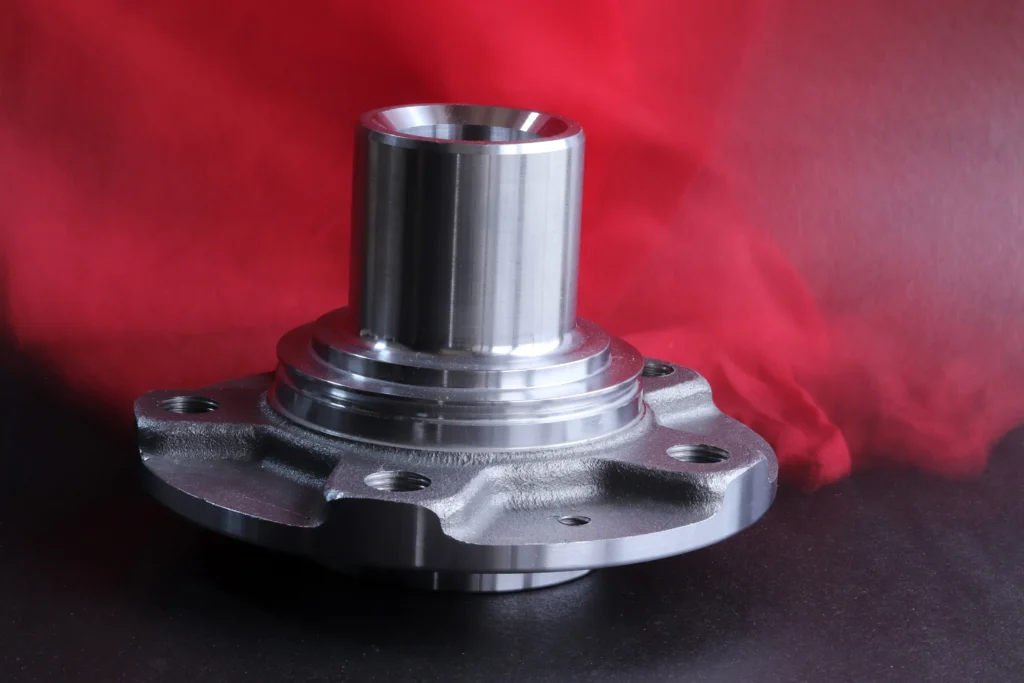
The gearbox is the second stage of the vehicle transmission system, which is composed of various shafts and gear components. These parts can be manufactured by CNC machining, with high precision and high efficiency. The casting parts of the gearbox can be finished by CNC milling and drilling tools.
What are Common Materials for Automotive CNC Machined Parts?
The four most commonly used materials in automobile CNC machining, each material has different properties and applications.
Metal
Aluminum alloy
Light but strong aluminum alloys are commonly used in parts such as engine blocks, cylinder heads and intake manifolds. They are favored for their excellent heat dissipation and corrosion resistance. Common levels include :
- 356-T6 : Known for good spell-making ability and strength.
- A356-T6 : Excellent strength and corrosion resistance for aerospace and automotive applications.
Cast iron
Cast iron is widely used in engine cylinder blocks mainly because of its robustness and excellent wear resistance. Levels used include :
- G3000 : It is known for its good processability and shock absorption performance.
- G3500 : enhanced strength and heat resistance.
Steel alloy
These devices are essential for the manufacture of high-strength components such as engine crankshafts and connecting rods. Common steel alloys include :
- 4340 : A nickel-chromium-molybdenum alloy known for its toughness and strength.
- 5140 : Due to its high fatigue strength and robustness, it is commonly used in manufacturing.
Titanium alloy
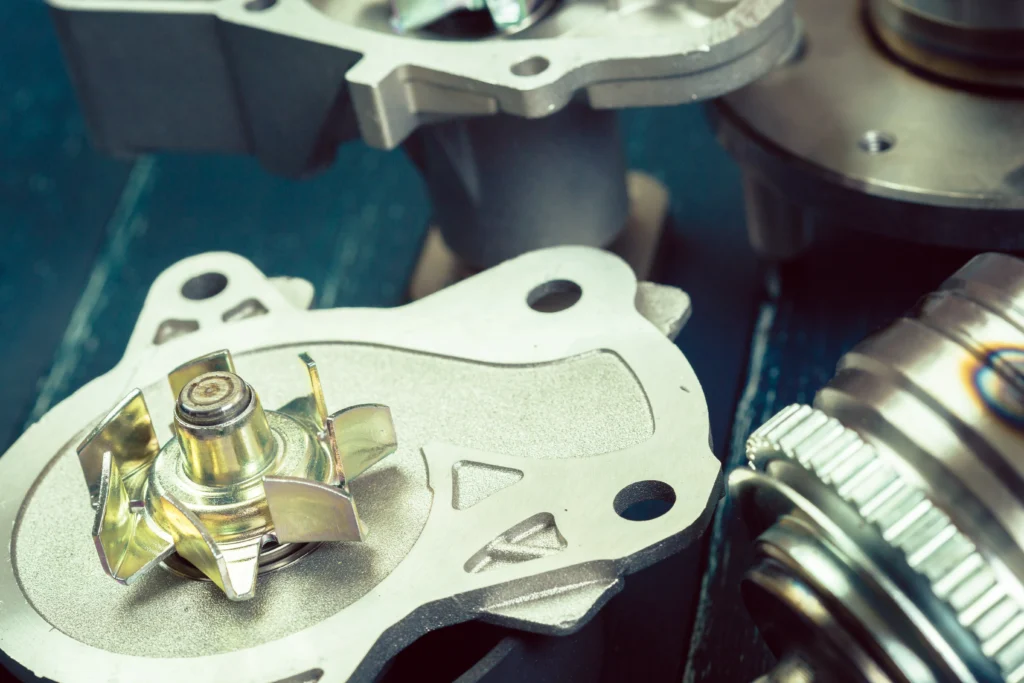
Due to their excellent strength-to-weight ratio and heat resistance, these engines are selected for high-performance engine components, ideal for critical high-stress components.
Copper alloy
These alloys have excellent thermal conductivity and are widely used in applications such as engine bearings and bushings. Famous grades include :
- C93200:Good wear resistance and strength.
- C93700: Is famous for its durability and corrosion resistance.
Plastic
Plastics are increasingly used in the automotive industry for components that require lighter and less flexible parts. Here are some common plastics :
- ABS ( Acrylonitrile Butadiene Styrene ) : ABS is famous for its strength and durability, used in dashboards and other interior parts.
- Polycarbonate : It is widely used because of its optical clarity and impact resistance, and is very suitable for lighting components such as headlamp lenses.
- Polypropylene : Often used because of its chemical resistance and elasticity, it is suitable for interiors and battery housings.
Nylon : High strength and high temperature resistance for components under the hood.
Composite Materials
In the field of automotive CNC machining, composite materials are favored because of their unique characteristics, such as high strength-to-weight ratio, corrosion resistance and tailored thermal properties. Commonly used composite materials include :
- Glass Fiber Reinforced Polymer ( GFRP ) : Due to its robustness and cost-effectiveness, it is used in non-load-bearing components such as interior panels and certain hood bottom components.
- Kevlar Reinforced Polymers : For components that require high impact resistance and durability, such as protective panels and certain types of racing seats, Kevlar composites also provide additional safety advantages.
Wood
Although wood is rare, it is sometimes used in luxury car interiors because of its beautiful and natural surface treatment. Numerical control machining allows accurate engraving and molding of boards used for instrument panel mounting, decoration and decorative elements. Commonly used wood types include :
- Walnut and mahogany : Known for their rich colors and texture patterns, these woods add elegance and style to the interior of the vehicle.
- Bamboo : Bamboo has been selected for its sustainability and strength and is becoming more and more popular in environmentally friendly vehicle design, especially in hybrid and electric vehicles.
CNC Machining Future Trends
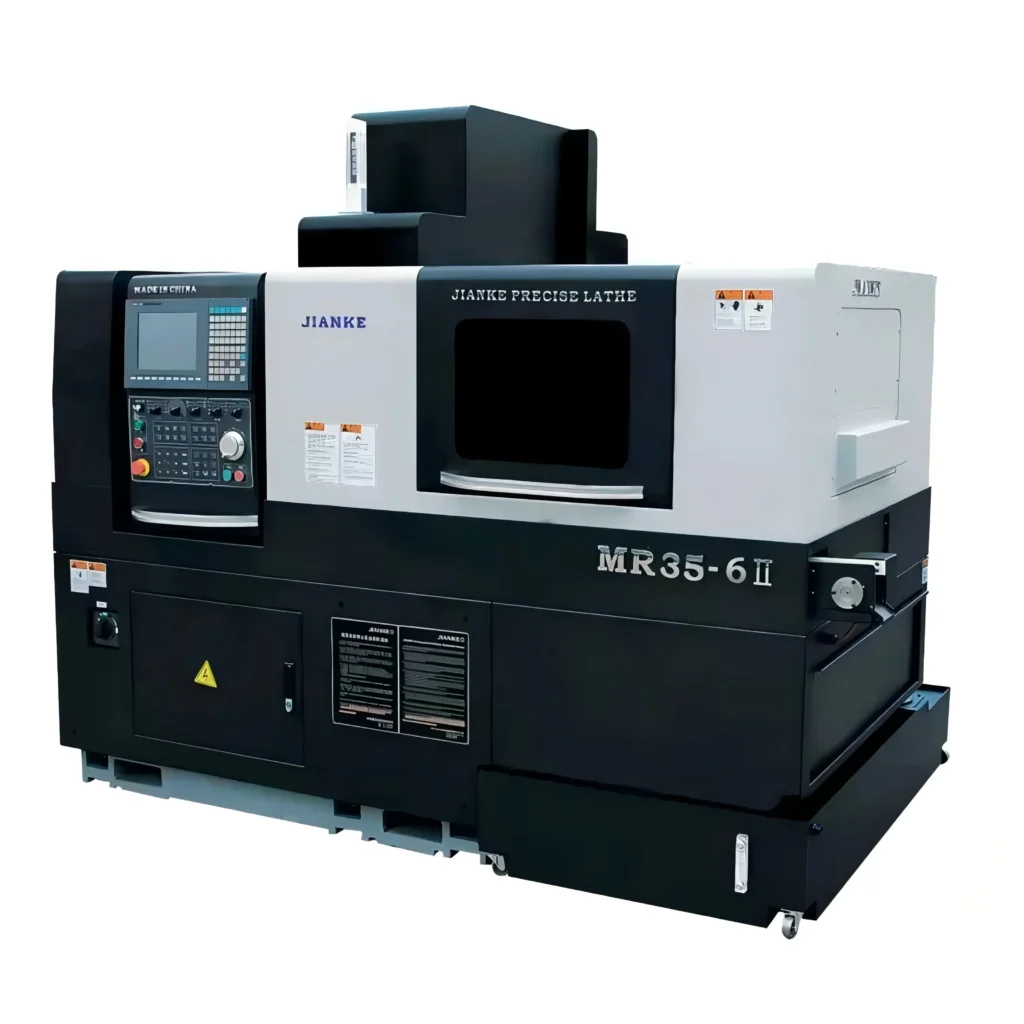
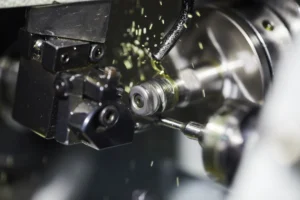
(Jianke Swiss Machine MR35-6)
Emerging technologies and their potential impacts
The future of numerical control technology will enhance the automobile manufacturing industry by efficiently processing advanced materials and composite materials to achieve lightweight and performance improvement.
The integration with additive manufacturing will enable complex part geometry and customization, enabling lightweighting and performance improvement using advanced materials and composites.
In addition, IoT connectivity will also be seamlessly integrated into smart factories through predictive maintenance, real-time data-driven manufacturing, and numerical control and material adjustment systems to optimize machine performance and maintenance.
Integration of Artificial Intelligence and Machine Learning
Artificial intelligence and machine learning will revolutionize CNC machining in automobile production. The predictive maintenance algorithm minimizes downtime, while dynamic tool path optimization and automated quality control systems improve efficiency and product consistency.
Combined with robot technology, artificial intelligence will improve flexibility and accuracy, enabling robots to adapt to real-time changes, autonomously handle complex tasks, reduce human errors, and increase productivity.
Sustainable Development and Environmental Practice
Advances in numerical control technology will support environmental protection practices in automotive manufacturing by improving material efficiency and energy conservation. This includes the use of advanced CAD / CAM software to optimize material utilization and the use of energy-saving processing techniques. The adoption of the principle of circular economy will further promote the recycling and sustainable production practice of the industry.
Get Precise CNC Parts for Your Project
Get customized CNC machines with advanced technology at JIANKE. For more information, please visit our ‘ Contact Us ‘ page.
FAQ
First, define your specifications ( e.g. tolerances, materials ) and work with reputable CNC service providers. CAD software is used to design parts, and then a quote is requested based on volume and complexity. For custom projects, online platforms or local stores can handle everything from prototyping to production. JIANKE recommendations usually include viewing evaluations, verifying certifications ( such as ISO 9001 ), and testing quality from small batches.
Yes, for low-to-medium-volume or complex parts, but for ultra-high-volume production ( e.g. millions ), it can be supplemented by stamping or casting. The cost depends on the material, machine time and installation – it is recommended to optimize the design to reduce the processing steps, potentially saving 20-50 % of the cost.
For amateurs, rigid milling cutters are suitable for aluminum ( shallow cutting ), but steel requires milling cutters or plasma cutting machines. Avoid using large routers to handle automotive parts.
CNC is reduced material manufacturing, through the cutting of raw materials forming, suitable for mass production of high precision, high strength parts. 3D printing is additive manufacturing, which is formed by stacking materials layer by layer. It is suitable for small batch and rapid manufacturing of parts with complex geometry.
Although it is safer than manual processing, there may be a risk of flying debris, noise or machine failure if improperly maintained. Appropriate training, personal protective equipment and safety regulations can minimize risk.