When selecting the CNC lathe, if the alternative is an automatic screw machine, the decision-making is often complicated. CNC lathes are usually a more secure choice for most multi-variety, small-batch, complex parts, or processing scenarios with frequent changes in drawings. Because of its faster program adjustment, it is not necessary to redesign the cam mechanism when switching parts series. However, if the part has been finalized, the size is small, and requires extremely high volume production, the automatic screw machine may still have an advantage in terms of tempo and cost per piece.
What is CNC Lathe?
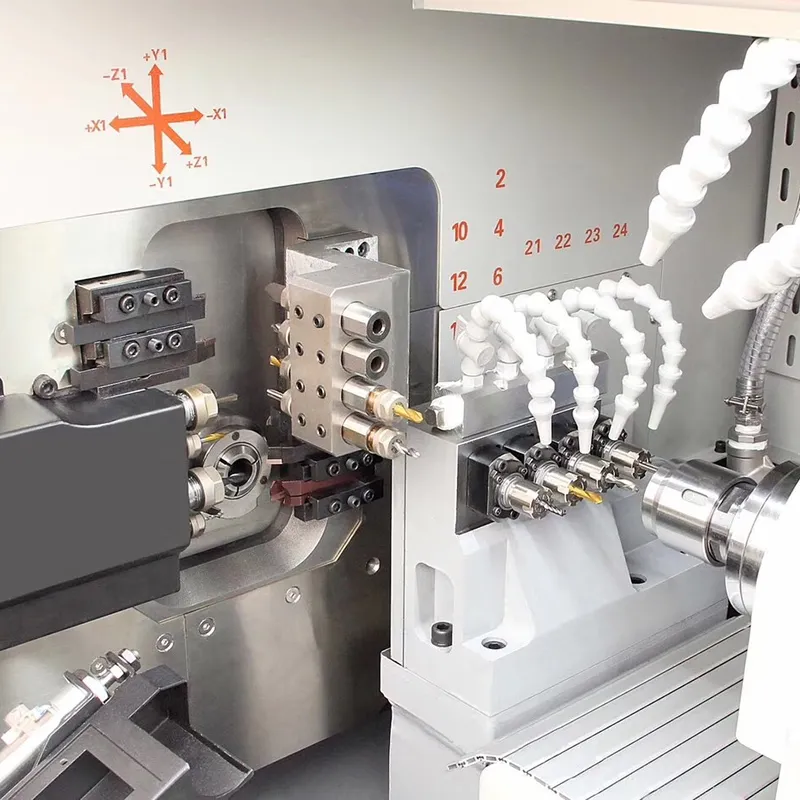
CNC lathe is a kind of turning equipment controlled by a digital program. The workpiece rotates and the tool removes the material during machining, which can form cylindrical surfaces, threads, grooves, holes, steps or milling features. If the device is equipped with live tooling and sub-spindle, turning, drilling, milling, tapping and cutting can be completed in one clamping. Due to the flexibility of the program, CNC lathes are particularly suitable for factories that need to process multiple parts, frequently adjust tolerances or respond to engineering changes.
Key features of CNC lathe:
Fast response to engineering change
CNC lathe has more advantages when the drawings are modified after the first batch of production. The tool path, tool compensation, feed, speed and process sequence can be adjusted digitally, thereby reducing the risk that the enterprise is limited by the fixed mechanical structure. This feature is particularly applicable when the user modifies the step length, thread back groove, groove width or surface roughness requirements.
Suitable for multi-variety production
If the factory needs to process samples, small batches, repair parts and medium batch orders on the same production line, CNC lathe can switch programs and tool kits, and users can support more parts series without occupying special equipment for a single part for a long time.
What is an Automatic Screw Machine?
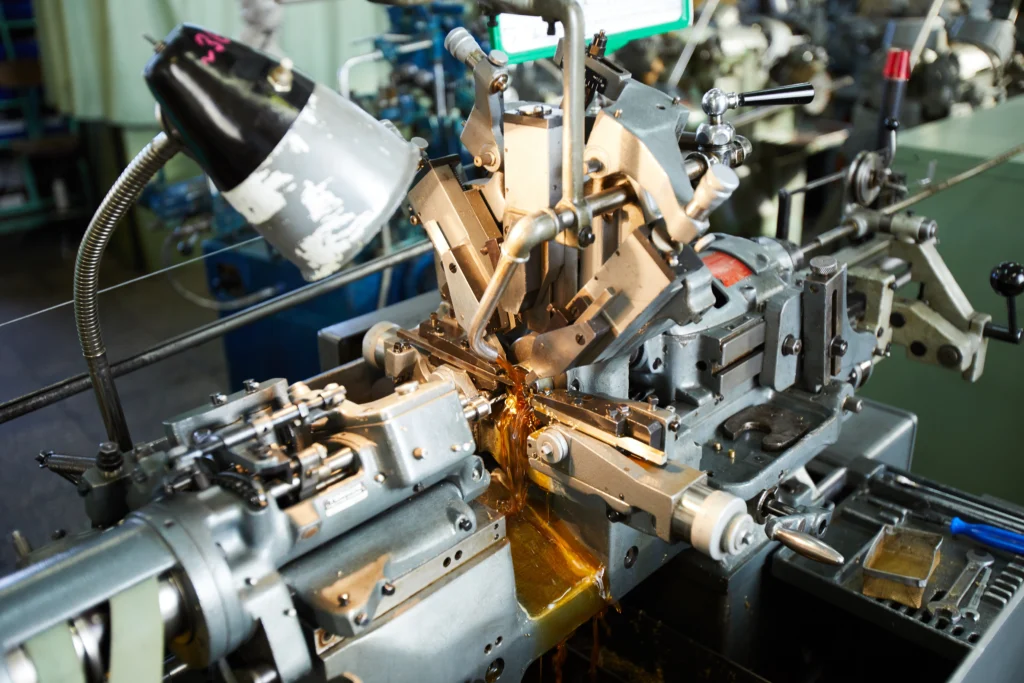
Automatic screw machine also belongs to lathe equipment, usually refers to the automatic production equipment for repetitive bar parts. The traditional automatic screw machine controls the tool movement through the cam. The multi-spindle machine can process multiple workpieces at the same time, so it still has obvious advantages in the mass production of drawing finalization. Common parts include joints, bushings, pins, threaded parts, small precision metal parts, etc.
Key features of automatic screw machine:
Lower cost of a single piece under stable mass production
When the parts have been finalized, the tolerances have been verified, and the order quantity is large enough, the automatic screw machine is the first choice. The multi-spindle structure enables multiple processes to be completed in parallel, so the cost of a single piece will be significantly reduced after the equipment debugging is completed.
Strong repeated processing ability of bar
An automatic screw machine is still very efficient for simple to medium complexity turning parts of round rods, hexagonal rods or square rods. The workflow of feeding, cutting, cutting and repeated circulation is very suitable for long-term continuous production, especially for long-term operation of orders of the same material and the same structure.
What is the Difference between CNC Lathe and Automatic Screw Machine?
Quickly learn through the comparison table below: what is the difference between CNC machined and automatic screw machines?
| Decision factor | CNC lathe | Automatic screw machine | Best fit |
|---|---|---|---|
| Control method | Computer numerical control program | Cam-driven, mechanically sequenced, or CNC screw-machine control | CNC lathe for flexible programming |
| Setup logic | Change program, tooling, offsets, and workholding | Cam, tooling, collet, and bar-feed setup can be more specialized | CNC lathe for frequent changeovers |
| Part geometry | Short to medium parts, larger diameters, varied shapes | Small to medium bar-fed turned parts, often repetitive | Depends on part size and annual volume |
| Production volume | Prototype, low, medium, and mixed high-volume runs | High-volume repeat jobs after setup is locked | Screw machine for mature mass production |
| Precision driver | Servo control, offsets, live tooling, inspection feedback | Repetition, collets, multi-spindle workflow, guide support in Swiss-type designs | Swiss-type CNC for micro precision |
| Unit cost | Lower risk across variable orders | Lower cost per part when cycle time dominates | Screw machine when design is stable |
| Operator skill | CNC programming, setup, offsets, process control | Cam setup, mechanical knowledge, bar-feed process control | CNC lathe when labor flexibility matters |
Control mode and conversion efficiency
The control method directly affects the cost of engineering change, so this is the first key difference. CNC lathe uses the machining program stored in the system, and many changes can be done by modifying the tool compensation, editing the program or updating the CAM path. In contrast, the traditional automatic screw machine, especially the cam screw machine relies more on mechanical timing control. After the equipment debugging is completed, its production efficiency is very high, but if the part design changes, more adjustment work is often needed.
For suppliers that need to produce a variety of precision parts, CNC turning solutions are more flexible. For a factory that stably produces the same mature part for a long time, the lower beat cost of the automatic screw machine can balance its higher adjustment cost.
Part size and geometry
Because the rigidity is affected by the aspect ratio, the geometry of the part often determines which device is more suitable. Conventional CNC turning center is usually more suitable for cylindrical parts with larger diameter, shorter length and stable clamping. An automatic screw machine is mainly for continuous bar processing, especially for small parts that are clamped by chucks and repeatedly produced at high speed.
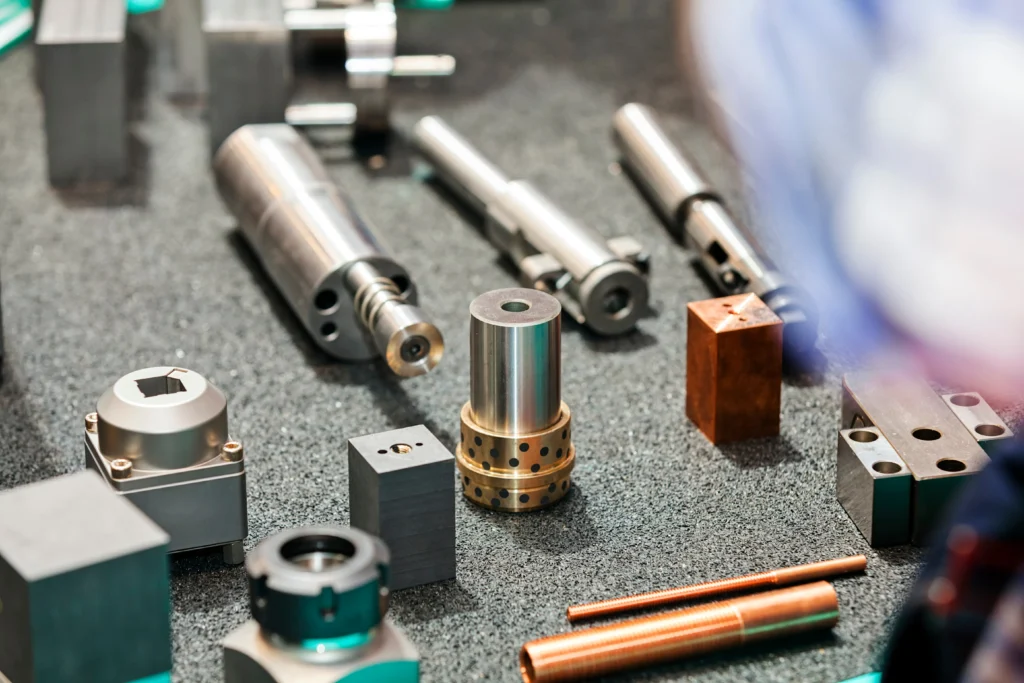
Swiss type CNC lathe is a more suitable choice when the parts are long, thin and complex. The guide sleeve supports the material at a position close to the tool, so bending deformation is less likely to occur when processing parts such as pins, micro-shafts, precision nozzles, and connector sleeves.
Precision and repeatability
Both types of equipment can process high-precision parts, but the ways to achieve accuracy are different. CNC lathe relies on servo control, digital tool compensation, compensation tool path and detection feedback to maintain dimensional stability. Automatic screw machines rely on mechanical repeatability, chuck positioning, process sequence control, and parallel processing flow in multi-spindle machines to ensure consistency.
Processing beat and capacity
If the part design is stable and the annual demand is high, the automatic screw machine usually has more advantages in terms of capacity. The multi-spindle screw machine can work simultaneously with 5, 6 or 8 spindles, and multiple processes can be completed in parallel. For orders that continuously process tens of thousands of simple or medium-complexity parts from the bar, this structure can significantly reduce the single-piece processing beat.
However, from the perspective of the whole order structure, CNC lathe has more advantages in the changing production environment. Even if a single piece is slightly slower, as long as it can reduce multiple secondary clamping, adapt to different materials, and switch operations without the need to redesign the cam, the overall processing risk and comprehensive cost may still be lower.
Tool configuration and secondary processing
The basic lathe may need to complete secondary drilling, milling, cutting or deburring on other equipment. If equipped with live tooling, modern CNC lathes can reduce these additional processes. Swiss type CNC lathe further integrates the spindle, sub-spindle, lateral drilling, milling and end face machining into a compact production unit.
Automatic screw machines have high efficiency in the case of clear process sequence and high repetition. However, if the part series includes horizontal holes, planes, grooves, and strict coaxiality requirements, CNC-controlled tool systems usually provide stronger process control capabilities.
Cost structure
Equipment cost and part cost are two different considerations, so the “cheapest equipment” does not necessarily represent the “lowest cost process“. The processing rate per hour of CNC lathe may be higher than that of automatic screw machine, but it can reduce the processing risk when the drawings change, the inspection requirements increase or the batch fluctuates. Automatic screw machines may require more professional adjustment, but once the process is stable, its single-piece cost often has obvious benefits.
JIANKE practical judgment: when there are many types of products and frequent changes, flexibility should be given priority; when the same part needs long-term stable production, mechanized equipment with high yield should be selected.
Operation skills and long-term support
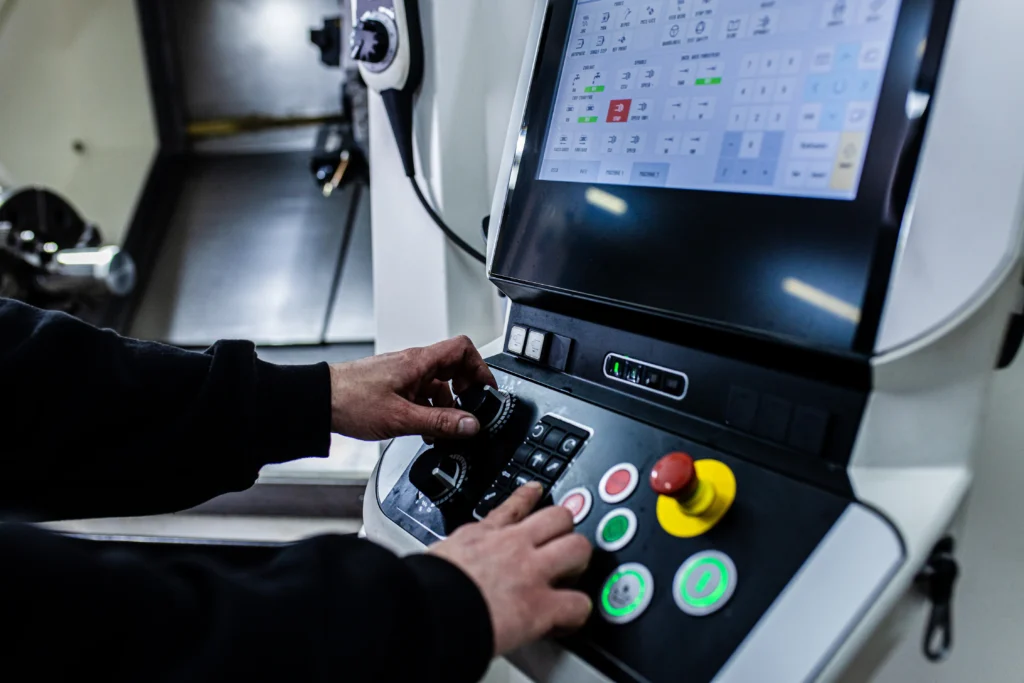
As skilled workers have become a constraint for many manufacturing enterprises, staffing should also be included in equipment decision-making. CNC lathe requires operators to have programming, tool compensation management, tool knowledge and process discipline. Traditional automatic screw machines require cam knowledge and mechanical adjustment experience, which is more difficult to supplement in some areas.
Therefore, CNC turning centers are more popular for many modern manufacturing enterprises. Training systems, CAM support, digital process documents and reusable programs are easier to standardize between different teams and different factories.
CNC Lathe & Automatic Screw Machine – Which equipment should be selected?
Based on the above analysis, CNC lathe is selected under the following conditions:
- The series of parts change frequently, and the engineering drawings are modified frequently.
- Batch coverage of samples, small batch to medium batch production.
- Parts have larger size, shorter length, or more geometric changes.
Select automatic screw machine under the following conditions:
- The size of the parts is small, from the bar processing, the drawings have been finalized, and the production batch is very high.
- The same process sequence will run for a long time, which is enough to share the cost of special commissioning.
- Single piece cost and processing time are more important than rapid response to design changes.
If the size of the part is small, slender and the tolerance is strict, and the flexibility of the CNC is required, then the Jianke Swiss type CNC lathe can be considered before making a decision between the traditional CNC lathe and the automatic screw machine.
No. CNC lathe is usually a programmable turning center for flexible machining, while automatic screw machine is mainly used for repetitive bar production. Some modern screw machines also use CNC control, but the focus on purchasing decisions is still different: CNC turning is more suitable for occasions where flexibility is required, and screw machining is more suitable for the production of high-volume mature parts.
For ordinary turning parts, as long as the tool, fixture and equipment are in good condition, both can achieve high precision. Swiss type CNC lathes are usually more advantageous for slender, small-diameter and strict-tolerance parts, because the guide sleeve can support the bar near the cutting area, thereby reducing the deflection during machining.
No. Although its versatility is not as good as a CNC turning center, an automatic screw machine is still valuable for stable mass production of bar parts. The main challenge is the tuning experience. If the factory has skilled operators and the order has long-term repeatability, the equipment can still provide high capacity and very low single-piece cost.
An automatic screw machine is often used to process joints, bushings, pins, fasteners, terminals, spacers, threaded inserts and other small bar turning parts. It is best suited for parts with repetitive geometries, stable materials and a large enough production volume to share the cost of the machine.