For machining workshops using CNC turning technology, saving a few seconds for each part often determines whether it is a profit or a loss. Whether you’re running a high-volume production line or running a dedicated custom processing shop, shortening the cycle time is the holy grail of efficiency.
However, how to improve the speed without reducing quality?
This guide will explore five proven methods to help you optimize your CNC turning operations. We will go beyond the basics and delve into tool path strategies, equipment upgrades and the unique features of modern CNC lathes.
What is the Cycle Time in CNC Turning?
The processing time in the CNC turning refers to the total time required to complete an operation on a workpiece. This includes:
- Cutting Time: The time when the tool actually removes the material.
- Rapid Positioning: The moving time (empty stroke) of the turret or tool holder between cutting actions.
- Tool Change Time: The number of seconds required for CNC lathes to switch tools.
- Loading/Unloading Time: The time required to manually or automatically process parts.
Why is it Important to Reduce the Cycle Time?
Shortening cycle time required to produce a part on a CNC lathe will bring a series of chain benefits:
- Throughput: Producing more parts per hour means higher revenues.
- Reduce Unit Costs: Fixed costs (electricity, labor, machine depreciation) are apportioned to more products.
- Competitive Advantage: A shorter delivery cycle makes your workshop more attractive to customers.
5 Effective Methods to Shorten the CNC Turning Processing
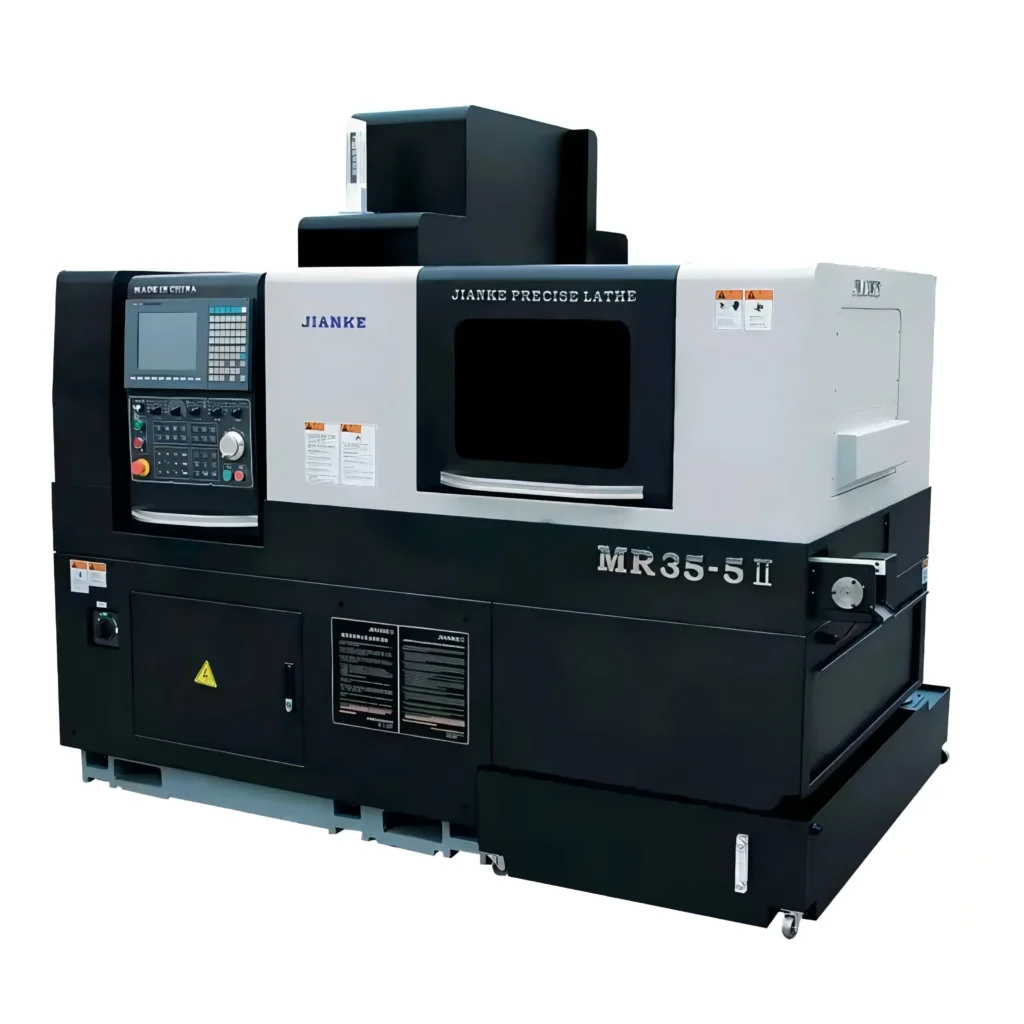
Here are the 5 most effective methods to optimize your CNC turning processes.
1. Optimize the Tool Path to Minimize Air Cutting
The most common issue affecting efficiency in CNC turning is the air cutting – when the tool moves at a cutting feed rate, but does not contact the material.
Tightening the Safety Gap: Modern CNC controllers process data extremely fast. You can minimize the safety gap (the safe distance before the tool starts cutting).
Bidirectional Cutting: If your CNC lathe and tool support, you can try bidirectional cutting. Using the modern design of the turning blade, cutting is also performed during the return trip, rather than returning to the starting point every time.
Rough Machining Strategy: Use a dynamic motion or cycloid turning path, which can maintain a constant chip removal load, thereby significantly increasing the cutting speed.
2. Maximize Feed and Speed (Without Damaging the Tool)
Many operators apply machines moderately in order to extend tool life. However, modern cemented carbide and ceramic inserts are designed to withstand high temperatures and high pressures.
Consulting Manufacturer: Always check the recommended line speed (SFM/surface foot per minute) for your specific blade and material combination.
Increasing the Feed Rate: The feed rate is usually more critical than the spindle speed in rough machining operations. Increasing the feed rate can reduce the residence time of the tool in the cutting process, which actually helps to control the temperature by taking away the heat from the chip.
The JIANKE team tips: Don’t rely on speculation. Use Machining Cloud or a similar calculator to find the theoretical limits of your tool.
3. Upgrade to Quick-change Tooling System
Replacing a worn blade or changing a handle in a standard CNC lathe can take several minutes.
Capto or KM Systems: Modular tooling systems allow you to change the tool head in seconds and maintain extremely high repeat positioning accuracy.
Presetting Tools: Measuring the tool outside the machine when the machine is running. This ensures that when the machine stops, the new tool is ready and can be put into use immediately.
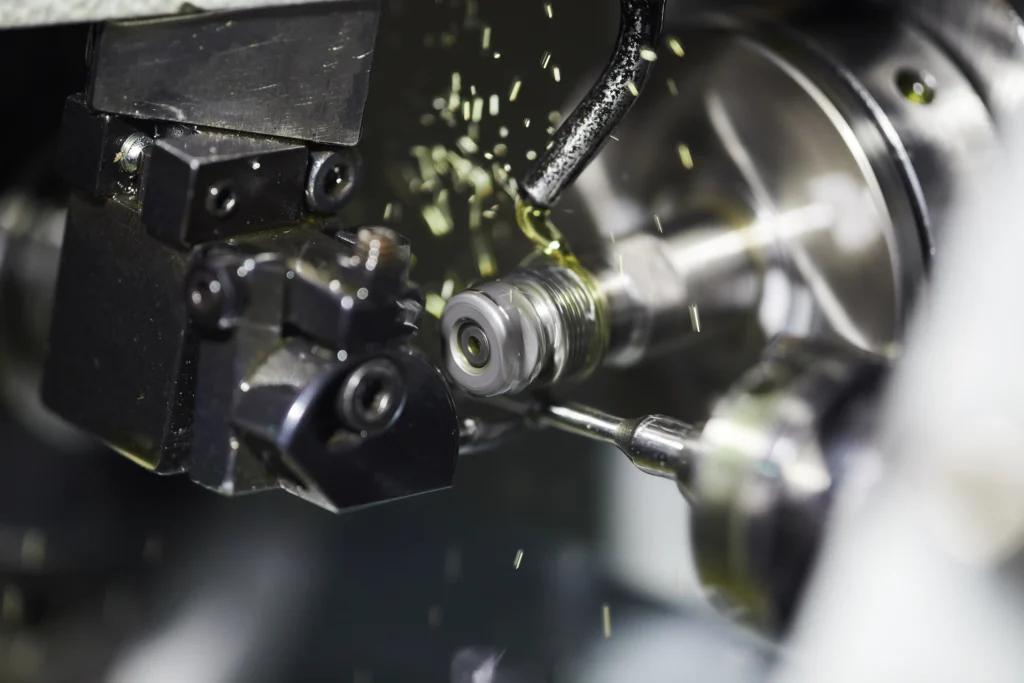
4. Implement High Pressure Cooling (HPC)
During high-speed CNC turning, the standard coolant often fails to penetrate the cutting zone that results in heat build-up and forcing you to slow down.
Chip Control: High pressure cooling (usually 1,000 PSI or higher) can strongly blow the chip away from the cutting zone. This prevents secondary cutting (chips re-engulfed), which is the main cause of blade damage.
Thermal Shock Prevention: Continuous cooling allows you to increase the turning speed by 20-30 % without causing thermal cracks in the blade.
5. Using Multi-Tasking Capabilities
If your workshop is equipped with a modern turning center, make sure to make full use of its functions to reduce handling time.
Done-in-One: Use a power tool (milling function on the lathe) to complete drilling, milling plane or tapping in the same clamping.
Sub-Spindles: Transfer the part to the sub-spindle to automatically process the back. This eliminates the need for a second operator to flip the part and load it into another machine.
CNC Turning vs. CNC Lathe: Understanding Nuances
| Comparison Table: CNC Turning vs. CNC Lathe | ||
|---|---|---|
| Feature | CNC Lathe | CNC Turning Center |
| Primary Function | 2-axis turning (X and Z) | Turning, Milling, Drilling |
| Tooling | Static tools mostly | Live tooling & Static tools |
| Complexity | Good for simple pins/shafts | Ideal for complex geometries |
| Cost | Lower capital investment | Higher investment, higher ROI |
Technical Aids for Cycle Time Reduction
Simulation Software
Run your program with verification software such as Vericut before cutting the single chip. This can identify inefficient movement and potential collisions, ensuring that your CNC turning program has reached an optimal state before getting off the shop floor.
Load Monitoring
Modern CNC lathe has load monitoring. If the tool only uses 20% of the spindle load, you have not yet fully utilized the performance of the machine. Improve parameters on the premise of safety until the optimum load is reached (rough machining is usually 80-90%).
The direct cost savings are calculated by multiplying the time saved by each part by the workshop rate. In addition, a shorter beat means increased capacity, which usually brings greater profit margins than simple cost savings.
In CNC turning, if the tool runs too slowly, it will cause friction rather than shear, which will produce too much heat and lead to work hardening. Compared with running at the correct higher speed (optimal cutting area), it will blunt the blade faster.
Yes. Although older machines may not have power tools or high-pressure cooling systems, they can still benefit from optimized tool paths (G-code optimization) and modern material blades. For example, the use of coated blades designed specifically for unstable conditions can achieve faster feed on old CNC lathes.
Modern CAM software (computer-aided manufacturing) can generate complex and efficient tool paths that are almost impossible to achieve by manual programming, such as dynamic turning or cycloidal turning. These strategies can maintain a constant tool load, allowing the operator to maintain a very high metal removal rate (MRR) throughout the CNC turning process, usually reducing the roughing time by more than 30 %.
Although automation (such as robotic arms or bar feeders) mainly reduces non-cutting time (i.e., loading and unloading time), it is crucial to the overall beat. Automation eliminates the difference, fatigue and rest time of manual operation, and ensures that each cycle of CNC lathe runs at the fastest and most consistent speed. For mass production, this improvement in stability is equivalent to a significant efficiency leap.
Conclusion
Optimizing CNC turning operations is a continuous improvement process. By analyzing your current workflow, upgrading your tooling strategy, and pushing your CNC lathe to its design limits, you can significantly shorten the machining beat.
Remember, the goal isn’t just to run faster – it’s to cut smarter. Today we begin to try one of these five strategies and measure the results.
To learn more about machining technology, check out our guide Eliminate Concerns: The ROI Of 5-Axis Machining or explore our CNC Lathe Maintenance Tips.